Labor Costs for Restaurants: 2026 Control Guide
Discover proven strategies to manage labor costs for restaurants in 2026. Learn benchmarks, optimization tactics, and how technology reduces expenses.
Managing labor expenses represents one of the most challenging aspects of running a profitable restaurant in 2026. With wages rising, staffing shortages persisting, and profit margins remaining thin, understanding how to control these costs without sacrificing service quality has become essential for survival. This guide explores practical strategies, industry benchmarks, and technological solutions that help restaurant operators optimize their workforce expenses while maintaining exceptional customer experiences.
Understanding Current Labor Cost Benchmarks
Labor costs for restaurants have reached unprecedented levels in recent years. According to the National Restaurant Association's analysis, full-service restaurants reported median labor costs of 36.5% of sales in 2024, a significant increase from the historical average of approximately 33%.
These elevated percentages reflect multiple economic pressures. Minimum wage increases across various states, fierce competition for qualified staff, and inflationary pressures on compensation packages have all contributed to this upward trend. Restaurant operators must now navigate a landscape where labor represents nearly as much cost as food and beverage expenses combined.
Labor Cost Variations by Restaurant Type
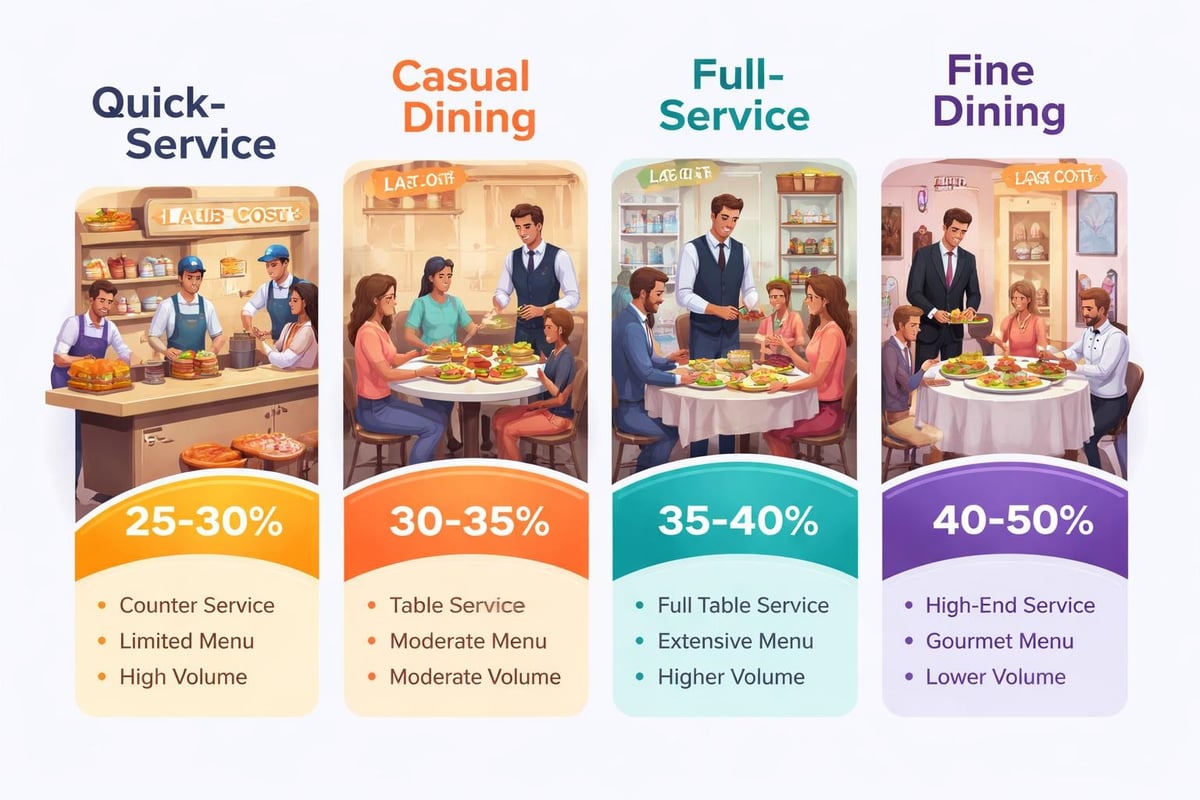
Different restaurant formats experience varying labor cost structures based on their service models and operational complexity.
Restaurant Type | Typical Labor Cost Range | Key Factors |
|---|---|---|
Quick-Service | 25-30% of revenue | Limited table service, streamlined operations |
Casual Dining | 30-35% of revenue | Moderate service levels, higher turnover |
Full-Service | 33-37% of revenue | Extensive service requirements, skilled staff |
Fine Dining | 35-40% of revenue | Highly trained staff, lower table turns |
Industry research on labor cost percentages confirms that these benchmarks vary significantly based on service complexity, menu pricing, and geographic location. Urban restaurants typically face higher labor costs due to increased minimum wages and competitive local job markets.
Calculating Your True Labor Costs
Understanding labor costs for restaurants requires more than simply dividing payroll by revenue. A comprehensive calculation includes multiple components that many operators overlook.
Essential Cost Components
Direct wages form the foundation of labor expenses, encompassing hourly wages, salaries, and tip credits. However, the complete picture requires adding employer-paid payroll taxes, which typically range from 7.65% to 10% of gross wages for Social Security, Medicare, and unemployment insurance contributions.
Benefits and insurance represent another substantial category. Health insurance, workers' compensation, paid time off, and meal programs can add 15-25% to base wage costs. Many restaurant operators underestimate these expenses when budgeting labor percentages.
Training and onboarding costs often go unmeasured but significantly impact profitability. The typical restaurant invests $3,000 to $5,000 per employee in recruitment, training materials, reduced productivity during learning periods, and administrative time.
The Prime Cost Formula
Industry professionals rely on the prime cost formula to evaluate overall operational efficiency. Prime cost combines food and beverage costs with total labor costs, ideally remaining below 60% of revenue for most restaurant concepts.
Prime Cost = Total Food & Beverage Costs + Total Labor Costs
Restaurants that maintain prime costs between 55-60% generally achieve healthier profit margins. Profitable full-service operators maintained labor costs at a median of 34.2% of sales in 2024, demonstrating that disciplined labor management directly correlates with financial success.
Strategic Scheduling for Labor Optimization
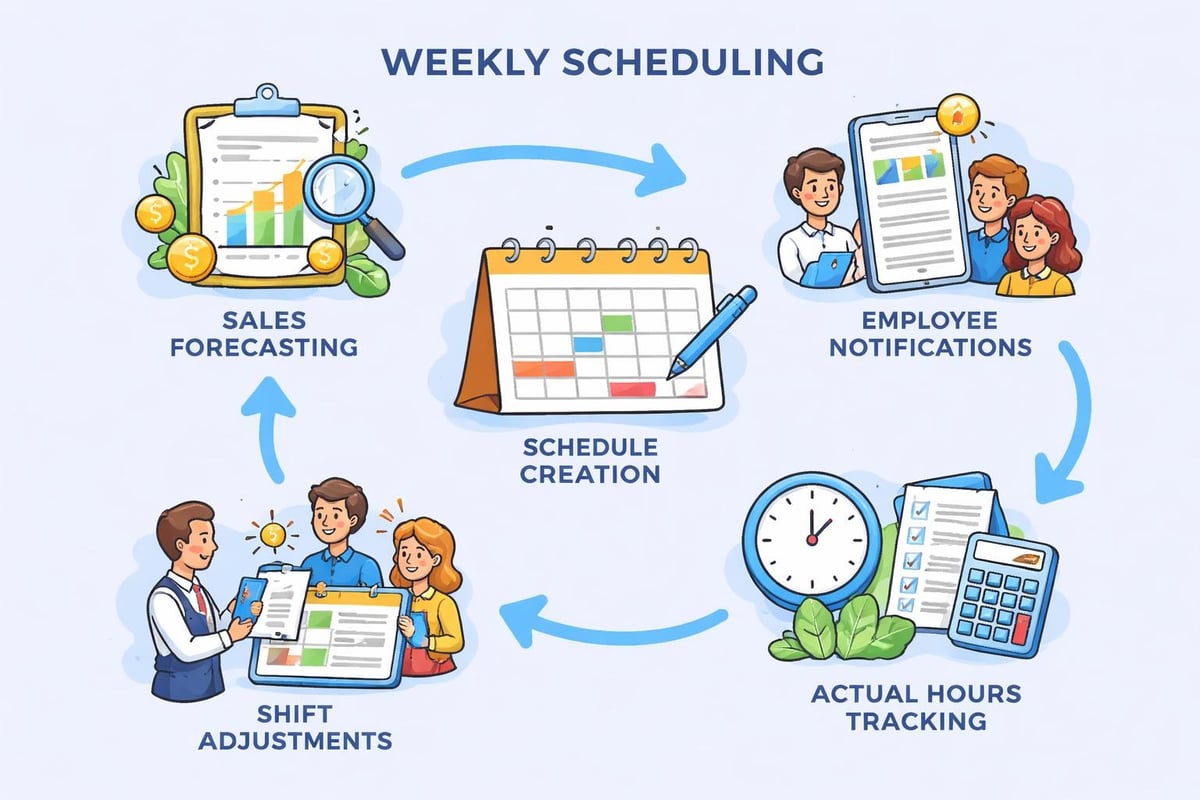
Effective scheduling stands as the most powerful tool for controlling labor costs for restaurants without compromising service quality. Smart scheduling matches staffing levels precisely to customer demand patterns, eliminating unnecessary labor hours while ensuring adequate coverage during peak periods.
Demand Forecasting and Historical Analysis
Successful scheduling begins with accurate demand forecasting based on historical sales data. Analyze sales by day of week, hour, and season to identify patterns. Weather events, local happenings, and holidays all influence customer traffic and should inform staffing decisions.
Key metrics to track include:
Sales per labor hour (SPLH)
Covers per labor hour
Average check size by daypart
Service quality metrics during different staffing levels
Modern scheduling platforms integrate point-of-sale data to automatically generate optimized schedules based on predicted demand. This data-driven approach typically reduces labor costs by 2-5% compared to intuition-based scheduling methods.
Implementing Flexible Staffing Models
Labor flexibility allows restaurants to respond quickly to fluctuating demand without overstaffing. Several models support this approach:
On-call scheduling maintains a roster of employees willing to work additional shifts with short notice. While this requires clear communication and fair practices, it provides valuable flexibility during unexpected rushes.
Split shifts allow restaurants to avoid paying employees during slow mid-afternoon periods while ensuring coverage for lunch and dinner rushes. However, employee satisfaction must be carefully managed to prevent turnover.
Cross-training programs enable staff to perform multiple roles, reducing the total number of employees needed per shift. A server who can also bartend or expedite provides scheduling flexibility that reduces labor waste. Solutions like shift swapping features empower employees to manage their own schedules within manager-defined parameters, increasing flexibility while maintaining coverage.
Technology Solutions That Reduce Labor Expenses
Technology investments deliver measurable returns through improved efficiency, reduced administrative time, and better labor cost control. The right tools pay for themselves within months through labor savings and operational improvements.
Time Tracking and Automated Timesheets
Manual timekeeping creates multiple problems that inflate labor costs. Buddy punching, forgotten clock-outs, and transcription errors typically add 2-8% to payroll expenses annually. Implementing automated time tracking solutions eliminates these inefficiencies while providing real-time visibility into labor costs.
Modern time tracking systems offer:
Biometric or mobile verification preventing buddy punching
Automatic overtime alerts when employees approach threshold hours
Real-time labor cost dashboards showing current spend against budget
Integration with payroll systems eliminating manual data entry
Restaurants using automated time tracking typically recover the system cost within three to four months through eliminated time theft and reduced administrative labor.
Scheduling Software with Labor Cost Controls
Advanced scheduling platforms build labor cost controls directly into the scheduling process. Managers receive immediate feedback when proposed schedules exceed target labor percentages, enabling adjustments before schedules are published.
Essential scheduling features include:
Labor budget enforcement preventing schedule publication over targets
Skill-based scheduling ensuring appropriate staff qualifications
Automatic break compliance preventing labor law violations
Mobile access enabling schedule changes and approvals from anywhere
Smart scheduling software for restaurants provides these capabilities while simplifying the entire workforce management process from schedule creation through payroll processing.
Point-of-Sale Integration
Integrating scheduling and time tracking with POS systems creates a powerful optimization loop. Sales data automatically informs future scheduling decisions, while real-time sales tracking enables mid-shift staffing adjustments.
This integration allows managers to monitor sales per labor hour throughout shifts, making informed decisions about early releases or calling in additional staff. Restaurants implementing POS integration typically improve labor efficiency by 3-7% within the first six months.
Staff Development and Retention Strategies
Reducing turnover represents one of the most effective methods for controlling labor costs for restaurants over the long term. The average cost of replacing a restaurant employee ranges from $3,500 to $5,500 when accounting for recruitment, training, and lost productivity.
Creating Competitive Compensation Packages
While higher wages seem counterintuitive for cost control, competitive pay reduces turnover expenses that ultimately cost more than modest wage increases. Restaurants paying 10-15% above local market rates often experience turnover rates 30-40% below industry averages.
Compensation strategies that improve retention include:
Performance-based bonuses tied to individual or team metrics
Tip pooling systems that create collaborative environments
Earned wage access allowing employees to access earned pay before payday
Clear advancement paths with defined wage increases
These investments in compensation create stable, experienced teams that serve customers more efficiently and require less managerial oversight, ultimately reducing overall labor costs.
Cross-Training and Skill Development
Cross-trained employees provide scheduling flexibility that reduces total staffing needs. A restaurant where most employees can competently perform 2-3 roles requires fewer total employees to maintain service standards.
Implement structured training programs that:
Define clear competency standards for each position
Provide paid training time for skill development
Recognize multi-skilled employees through pay premiums
Create career advancement opportunities within the organization
According to strategies for reducing restaurant labor costs, cross-training ranks among the most effective long-term cost reduction tactics while simultaneously improving employee satisfaction and retention.
Operational Efficiency Improvements
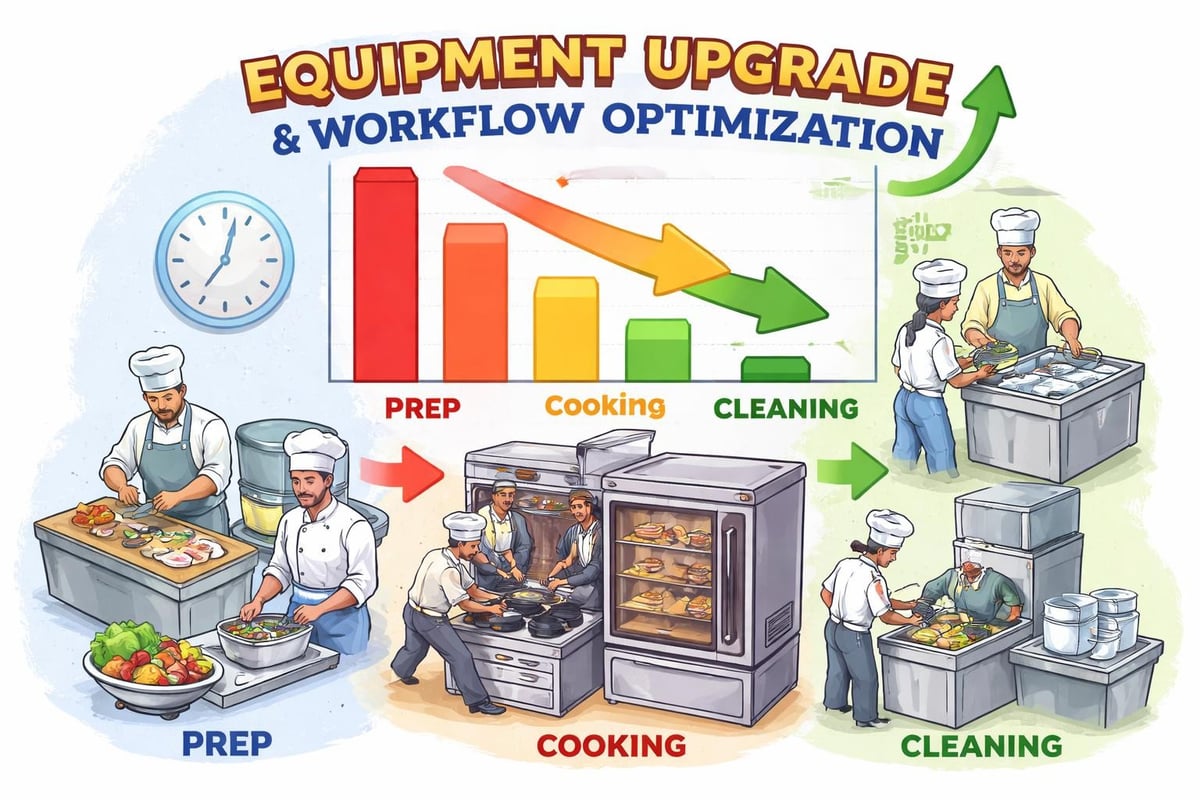
Process improvements and equipment investments reduce the labor hours required to operate effectively, lowering overall labor cost percentages without cutting staff.
Kitchen Layout and Workflow Optimization
Inefficient kitchen layouts waste labor through unnecessary movement and poor station organization. Time-and-motion studies often reveal that kitchen staff spend 25-35% of their time simply moving between stations or retrieving items.
Workflow improvements include:
Positioning high-use ingredients within arm's reach of preparation stations
Creating dedicated prep zones that support multiple cooking stations
Installing pass-through equipment reducing trips between areas
Organizing storage using first-in-first-out systems that reduce search time
Many operators partner with restaurant consulting services like Consult-Gastro during concept development or renovation projects to optimize layouts that minimize labor requirements while maximizing productivity.
Menu Engineering for Labor Efficiency
Menu complexity directly correlates with kitchen labor requirements. Each additional menu item increases ingredient handling, preparation steps, and potential for errors that require remakes.
Analyze your menu for labor efficiency by:
Calculating preparation time required for each menu item
Identifying items that share preparation steps or ingredients
Eliminating low-margin, high-labor items that don't drive customer satisfaction
Standardizing recipes to reduce variation and training time
Restaurant operators managing food costs effectively understand that menu engineering impacts both food and labor expenses simultaneously. Streamlined menus featuring high-quality, efficiently prepared dishes typically achieve better prime cost ratios than extensive menus requiring specialized preparation.
Equipment Investments That Reduce Labor
Strategic equipment purchases reduce labor requirements through automation and improved efficiency. While capital intensive, these investments often deliver compelling returns through labor savings.
Equipment Type | Labor Impact | Typical ROI Period |
|---|---|---|
Combination Ovens | Reduces monitoring time, enables batch cooking | 18-24 months |
Automated Beverage Systems | Eliminates bartender time for standard drinks | 12-18 months |
Dishwasher Upgrades | Faster cycles reduce required dishwashing staff | 24-30 months |
Food Processors | Reduces prep time for chopping, slicing, mixing | 8-12 months |
Technologies and equipment for reducing restaurant labor costs should be evaluated based on total cost of ownership including labor savings, energy efficiency, and maintenance requirements.
Monitoring and Continuous Improvement
Controlling labor costs for restaurants requires ongoing monitoring and adjustment rather than one-time interventions. Establishing regular review processes ensures labor expenses remain aligned with business objectives.
Key Performance Indicators to Track
Effective labor cost management requires monitoring multiple KPIs that provide early warning of problems before they significantly impact profitability.
Essential labor metrics include:
Labor cost percentage (daily, weekly, and period)
Sales per labor hour by daypart
Actual versus scheduled labor hours
Overtime hours as percentage of total hours
Employee turnover rate and cost per hire
Dashboard reporting that consolidates these metrics enables proactive management. Managers should review labor performance at least weekly, with daily monitoring during high-volume periods or when implementing new procedures.
Weekly Labor Cost Reviews
Institute weekly labor review meetings focused on analyzing the previous week's performance and adjusting upcoming schedules accordingly. These sessions should examine:
Variance between scheduled and actual labor hours
Comparison of labor percentage against target and prior periods
Sales per labor hour trends and anomalies
Upcoming events requiring scheduling adjustments
Employee performance issues impacting labor efficiency
Documentation of these reviews creates accountability and tracks improvement initiatives over time. Restaurants implementing structured labor review processes typically reduce labor costs by 1-3% within the first quarter through improved awareness and faster problem identification.
Seasonal Adjustments and Planning
Labor requirements fluctuate significantly based on seasonal demand patterns. Proactive planning for these variations prevents both understaffing during busy periods and overstaffing during slow seasons.
Develop seasonal labor plans that:
Project revenue and customer count by month
Adjust staffing models based on historical patterns
Schedule training and cross-training during slower periods
Plan hiring timelines to have staff trained before busy seasons
Communicate schedule changes well in advance to maintain employee satisfaction
Understanding these patterns allows strategic use of part-time staff to handle seasonal peaks without carrying excess labor costs year-round.
Building Accountability Into Your Culture
Creating a culture where all team members understand labor costs and their role in controlling them generates better results than top-down management alone. Transparency and accountability transform labor management from a managerial burden to a team responsibility.
Manager Training and Empowerment
Front-line managers make dozens of daily decisions impacting labor costs. Investing in their understanding of labor economics and providing clear decision-making authority delivers measurable improvements.
Effective manager training covers:
How labor costs impact overall profitability and sustainability
Reading and interpreting labor reports and dashboards
Making real-time staffing adjustments based on sales trends
Coaching employees on efficiency without sacrificing quality
Balancing labor control with employee satisfaction and retention
Empowered managers who understand both the financial and human aspects of labor management make better decisions that optimize costs while maintaining team morale.
Employee Engagement and Communication
Employees who understand business economics often become partners in efficiency improvements rather than viewing labor control as threatening. Transparent communication about labor targets and business performance builds this partnership.
Share information such as:
How labor costs impact the restaurant's ability to provide competitive wages
Team performance against labor targets with recognition for achievements
Connection between efficient operations and advancement opportunities
Individual contribution to team efficiency metrics
This transparency creates ownership and often generates employee-driven suggestions for process improvements that reduce labor waste while improving job satisfaction.
Controlling labor costs for restaurants in 2026 requires a comprehensive approach combining accurate tracking, strategic scheduling, technology adoption, and cultural commitment to efficiency. By understanding industry benchmarks, implementing systematic controls, and investing in both technology and people, restaurant operators can achieve sustainable labor cost targets while maintaining the service quality that drives customer loyalty. Heybegin simplifies this entire process with intelligent scheduling and time tracking designed specifically for restaurants, providing the tools needed to optimize labor costs while reducing administrative burden and improving workforce management efficiency.