Guide to Planning and Scheduling Software for 2026
Discover the latest trends and essential features in planning and scheduling software for 2026. Choose the right solution to boost efficiency and stay competitive.
Imagine your business running so smoothly that every task, resource, and deadline falls perfectly into place. As organizations face rising complexity, the need for real-time, data-driven solutions has never been greater. That is where planning and scheduling software comes in, transforming productivity and reducing costs through intelligent automation.
This guide will walk you through the evolution, essential features, and selection process for planning and scheduling software in 2026. Discover the latest trends, integration strategies, and actionable steps to help your organization achieve accurate forecasting, streamlined workflows, and a true competitive edge. Ready to make an informed decision? Let’s get started.
The Evolution of Planning and Scheduling Software
The journey of planning and scheduling software has transformed business operations. In the early days, most organizations relied on manual processes or basic spreadsheets to manage tasks, allocate resources, and set timelines. While these methods offered some structure, they often led to inefficiencies, data entry errors, and difficulties scaling as companies grew.
As businesses recognized these limitations, the 2010s and 2020s brought a wave of digital innovation. Companies began adopting dedicated planning and scheduling software, moving away from spreadsheets toward automated platforms. Cloud-based solutions soon emerged, allowing teams to collaborate in real time and access schedules from anywhere. In industries like manufacturing, the integration of ERP and APS systems enabled real-time scheduling and streamlined workflows. According to industry data, businesses leveraging automated scheduling have achieved up to a 20% increase in operational efficiency. Today, automation is no longer optional—it is a fundamental competitive requirement. To see how advanced features have shaped this evolution, review this advanced scheduling features overview.

The Shift from Manual to Automated Solutions
Manual planning methods once dominated the landscape. Teams spent hours updating spreadsheets and cross-checking data. This approach was error-prone and made it hard to adapt to changes quickly.
With the rise of digital transformation, businesses adopted planning and scheduling software that automated repetitive tasks and improved accuracy. Cloud platforms further enhanced accessibility and teamwork, leading to better decision-making. For example, manufacturers implemented ERP and APS systems to enable real-time scheduling, which helped reduce bottlenecks and delays.
The result? Companies gained measurable improvements in efficiency. On average, automated scheduling has delivered a 20% boost in operations. These advances have turned planning and scheduling software from a helpful tool into an essential driver of business success.
Emerging Technologies Shaping 2026
Looking ahead, emerging technologies are redefining what planning and scheduling software can accomplish. Artificial intelligence and machine learning are now central to predictive scheduling and optimization, allowing businesses to anticipate needs and respond faster to disruptions.
Digital twins let organizations simulate and stress-test production plans before implementation, minimizing downtime and risk. The Internet of Things (IoT) connects equipment, sensors, and staff, providing real-time data for instant adjustments. Cloud-native and mobile-first platforms offer flexibility for teams working across locations and devices.
For example, advanced manufacturers use digital twin technology to model entire operations, identify potential issues, and optimize schedules. The convergence of these technologies is setting a new standard, making planning and scheduling software smarter, more adaptive, and more integral to organizational strategy.
Key Features to Look for in 2026 Planning and Scheduling Software
Selecting the right planning and scheduling software in 2026 means understanding which capabilities drive true operational excellence. The landscape is evolving rapidly, so knowing what to look for ensures your investment delivers measurable results and future-proofs your organization.
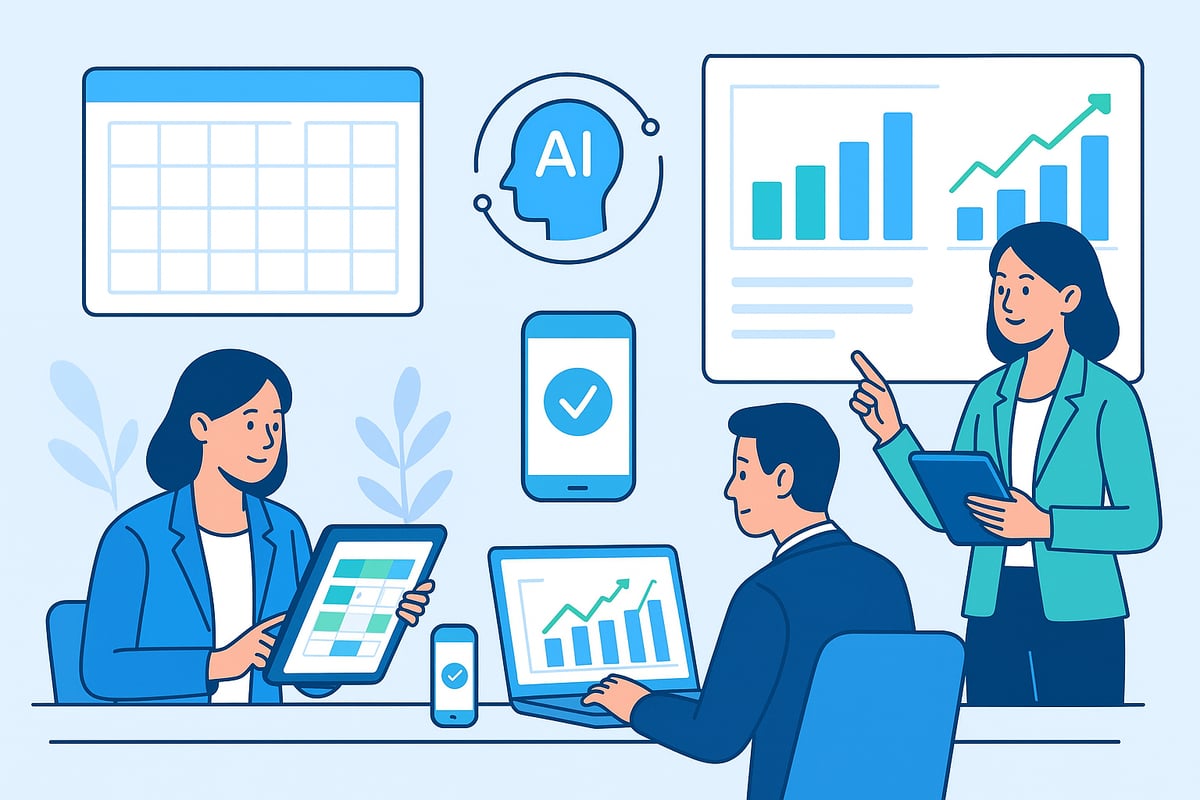
Intelligent Automation and Optimization
The backbone of modern planning and scheduling software is intelligent automation. AI-driven scheduling engines dynamically allocate resources, balancing workloads and anticipating disruptions. Predictive analytics help forecast demand, so schedules remain agile.
Key features include:
Dynamic resource allocation with AI
Proactive adjustment to machine breakdowns or labor shortages
Risk-based scenario simulation
For example, some platforms use discrete event simulation to optimize schedules in real time. With these advancements, planning and scheduling software transforms reactive planning into a proactive, resilient process.
Real-Time Data Integration and Visibility
Seamless integration with core business systems is vital. Planning and scheduling software should connect effortlessly with ERP, CRM, and inventory tools, ensuring a unified data flow. Real-time dashboards visualize bottlenecks, workload, and KPIs, empowering managers to make swift decisions.
Companies leveraging reporting and analytics in scheduling gain actionable insights and can run "what-if" scenarios. Real-time visibility reduces lead times and keeps everyone aligned, making data-driven scheduling the new standard.
User Experience and Customization
User adoption hinges on intuitive design. Leading planning and scheduling software offers drag and drop interfaces and customizable dashboards. Mobile access gives managers and staff flexibility, supporting on-the-go decision-making.
Look for:
Role-based permissions
Collaborative tools for teams
Visual schedules tailored to departments
Customizable user experiences help ensure the software fits your workflows, not the other way around.
Scalability and Adaptability
Growth requires systems that scale. Planning and scheduling software in 2026 must support multi-site and multi-department operations. Templatized model objects enable quick deployment and updates across new locations.
Adaptive systems evolve with your business, handling increased complexity without sacrificing performance. This scalability is essential for organizations targeting expansion or diversification.
Security and Compliance
With sensitive operational data at stake, robust security is non-negotiable. Planning and scheduling software should provide encryption, detailed access controls, and audit trails. Compliance with standards such as ISO and GDPR is crucial.
By prioritizing security, organizations protect their data and maintain trust with stakeholders. Secure, compliant systems are foundational for sustainable growth in a digital-first era.
Step-by-Step Guide to Selecting the Right Software for Your Business
Choosing the best planning and scheduling software for your organization requires a structured approach. By following these steps, you will ensure that your investment delivers measurable improvements and aligns with your business goals.

Assessing Organizational Needs
Begin by analyzing your current planning and scheduling software processes. Identify bottlenecks, recurring issues, and manual tasks that slow down operations. Engage stakeholders from operations, IT, HR, and finance to gather diverse perspectives.
Define your organization’s core objectives, such as reducing costs, improving efficiency, or ensuring regulatory compliance. Document these goals clearly to guide your software selection journey.
Evaluating Software Options
Research top vendors offering planning and scheduling software. Compare their features, support structures, and industry reputation. Shortlist solutions that align with your organization’s sector and complexity.
Request product demos and trial access to evaluate usability and functionality. Assess how well each platform integrates with your existing systems, such as ERP or CRM, to ensure seamless data flow and minimal disruption.
Prioritizing Key Features
Match your business requirements to the available planning and scheduling software features. Focus on AI-driven scheduling, real-time data integration, and mobile accessibility. Consider scalability, ensuring the solution can grow with your organization.
Evaluate customization options, such as drag-and-drop interfaces and role-based dashboards. For further insights into practical scheduling challenges, review resources like the Employee scheduling solutions blog.
Budgeting and ROI Analysis
Calculate the total cost of ownership for each planning and scheduling software option, factoring in licensing, implementation, and training expenses. Estimate potential ROI based on projected efficiency gains and cost savings.
Examine industry benchmarks, which show that automated scheduling can reduce labor costs by 10 to 15 percent. Use these figures to inform your decision-making and justify the investment to stakeholders.
Implementation Planning
Develop a phased rollout strategy to minimize risk and encourage adoption. Plan comprehensive training sessions for all user levels, addressing potential resistance early.
Set clear, measurable KPIs, such as improved on-time delivery or reduced lead times, to track the impact of your new planning and scheduling software. Regularly review performance and gather feedback to refine processes post-implementation.
Integration Strategies: Connecting Planning and Scheduling Software with Your Tech Stack
Integrating planning and scheduling software within your tech stack is essential for achieving a unified, data-driven approach to business operations. A well-connected system enables seamless decision-making and maximizes the value of your technology investments.
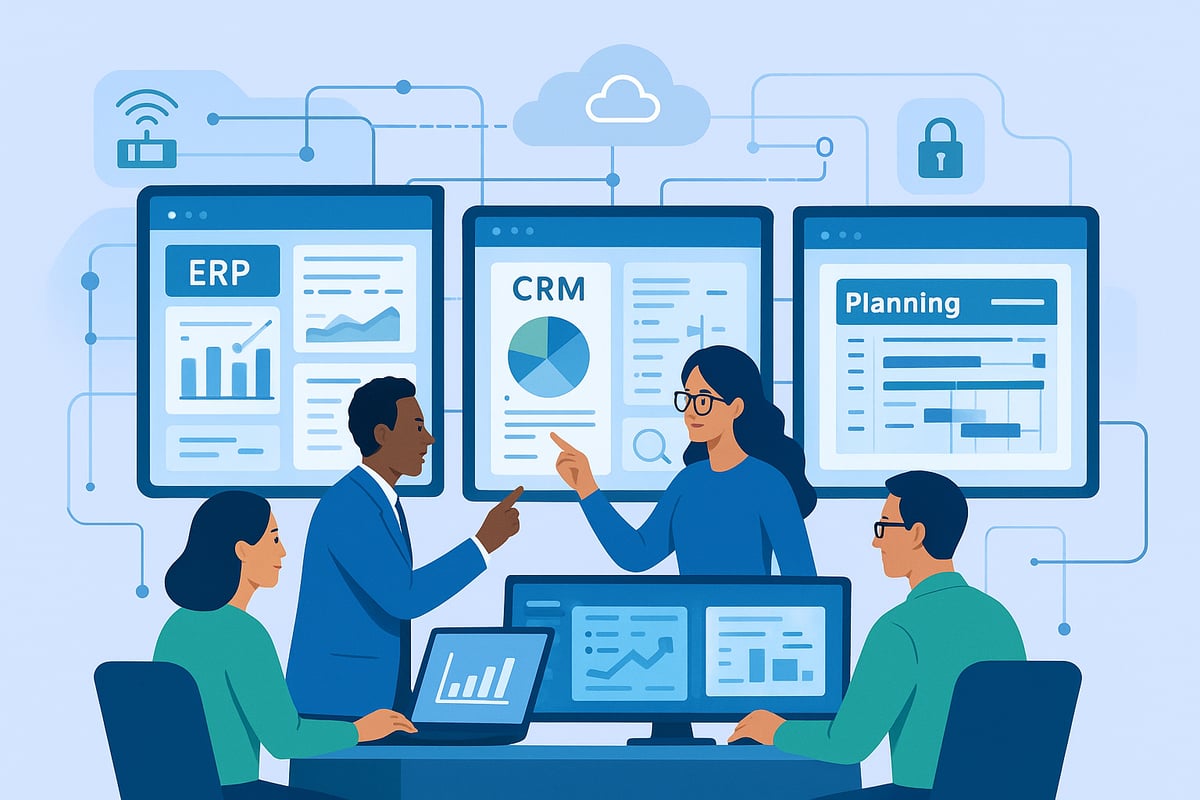
ERP, CRM, and Inventory System Integration
Effective planning and scheduling software delivers its full potential when tightly integrated with ERP, CRM, and inventory management platforms. This integration ensures data flows smoothly across functions, breaking down silos and enabling real-time visibility into resources, orders, and inventory levels.
Many organizations rely on APIs and middleware to connect disparate systems, automating data exchange and reducing manual entry errors. For example, manufacturers often link their planning and scheduling software with inventory modules to enable just-in-time production and prevent stockouts.
By centralizing data, businesses can coordinate production, sales, and supply chain activities more efficiently. This leads to improved responsiveness and better alignment across departments.
Leveraging IoT and Real-Time Data Sources
Connecting planning and scheduling software with IoT devices, sensors, and machines unlocks real-time insights for agile decision-making. Data from equipment, vehicles, and production lines can feed directly into scheduling algorithms, allowing for immediate adjustments when disruptions occur.
The integration of AI and digital twins further enhances this capability, providing simulation and predictive analytics for complex environments. For a deeper look at how these technologies work together, see Production Scheduling with AI and Digital Twins.
This approach empowers businesses to optimize resource allocation, minimize downtime, and rapidly adapt to changing conditions.
Data Security and Governance
As planning and scheduling software becomes more interconnected, robust data security and governance are critical. Secure data transfer between platforms is achieved through encryption, user authentication, and strict access controls.
Compliance with regulations, such as GDPR or industry-specific standards, must be prioritized. Audit trails and monitoring tools help organizations track data movement and ensure accountability across integrated systems.
A proactive approach to security builds stakeholder trust and protects sensitive business information.
Overcoming Common Integration Challenges
Integrating planning and scheduling software with existing systems often presents challenges, including data silos, compatibility issues, and legacy infrastructure. These obstacles can slow down implementation or create inconsistencies in information flow.
To address these challenges:
Use phased integration strategies to minimize disruption.
Leverage standardized APIs and middleware for compatibility.
Invest in thorough testing and staff training.
By anticipating and systematically resolving integration hurdles, organizations can maximize their return on technology investments and achieve seamless operations.
Future Trends in Planning and Scheduling Software for 2026 and Beyond
The future of planning and scheduling software is being shaped by rapid advances in technology and changing business priorities. Organizations are seeking tools that offer deeper insights, more automation, and greater adaptability. Let us explore what lies ahead for planning and scheduling software in 2026 and beyond.
AI-Driven Predictive and Prescriptive Scheduling
Artificial intelligence is revolutionizing planning and scheduling software by enabling predictive and prescriptive scheduling. AI algorithms analyze historical data, monitor real-time conditions, and recommend optimal schedules. This empowers organizations to anticipate disruptions and make proactive decisions. For example, AI-Driven Adaptive Air Transit Network research highlights how AI dynamically optimizes complex transit schedules, reflecting broader industry trends.
Digital Twin Technology Expansion
Digital twins are becoming essential in planning and scheduling software. These virtual models simulate entire processes, letting teams stress-test different scenarios before implementation. Manufacturers use digital twins to experiment with production changes, reducing downtime and improving efficiency. As digital twin adoption grows, organizations will gain more control and foresight over their operational schedules.
“Glass Box” Transparency and Explainability
Transparency is increasingly important for planning and scheduling software. Stakeholders demand to see how schedules are generated and why certain decisions are made. “Glass box” scheduling engines offer clear logic trails and auditable processes. This builds trust among users and supports regulatory compliance, especially in highly regulated industries. Clear explainability will become a standard expectation.
Continuous, Bucketless Planning
Traditional scheduling often relies on fixed intervals or “buckets.” The next evolution in planning and scheduling software is continuous, real-time scheduling. These systems adjust instantly to new data, enabling greater agility and responsiveness. Businesses benefit from faster adaptation to market shifts, resource changes, or unexpected disruptions, ensuring smoother operations and less downtime.
Industry-Specific Customization
Different industries have unique requirements for planning and scheduling software. In 2026, expect more tailored solutions with sector-specific templates and libraries. Manufacturing, healthcare, hospitality, and logistics will all benefit from software that addresses their distinct workflows. Customization ensures organizations get maximum value and efficiency from their chosen solution.
The Rise of Mobile-First and Collaborative Platforms
Mobile-first platforms are transforming planning and scheduling software by boosting accessibility and teamwork. Managers and staff can view and update schedules on the go, enhancing coordination across distributed teams. Solutions like the mobile app for scheduling illustrate how mobile integration is driving flexibility and real-time collaboration, which are vital for modern businesses.
Sustainability and ESG Integration
Sustainability is becoming a priority in planning and scheduling software. Companies are now incorporating environmental, social, and governance (ESG) metrics into scheduling decisions. By optimizing schedules to minimize energy use or reduce waste, organizations support their sustainability goals. This integration not only benefits the environment but also enhances brand reputation and compliance.
Best Practices for Successful Implementation and Adoption
Implementing planning and scheduling software is a transformative journey for any organization. Success depends not only on technology but also on people, processes, and continuous adaptation. The following best practices ensure your investment delivers long-term value.
Building Cross-Functional Teams
Start by assembling a cross-functional team that includes IT, operations, HR, and finance. This group should represent all key stakeholders affected by planning and scheduling software. Early involvement fosters alignment and helps anticipate challenges.
Assign clear roles and responsibilities.
Schedule regular meetings for status updates.
Encourage transparent communication across departments.
When everyone is on board from the outset, your planning and scheduling software project is more likely to meet its objectives and minimize resistance.
Training and Change Management
Effective training is crucial for ensuring adoption of planning and scheduling software. Develop customized programs for users at different levels, from frontline staff to executives. Address concerns and highlight how new software will simplify daily tasks.
Provide hands-on workshops and e-learning modules.
Offer ongoing support and troubleshooting resources.
Recognize early adopters and share success stories.
Comprehensive change management helps reduce anxiety and builds confidence in the new system, making the transition smoother.
Continuous Improvement and Feedback Loops
Adoption does not end at go-live. Encourage users to provide feedback regularly, and use this input to refine processes and features. Analytics dashboards in planning and scheduling software can help identify bottlenecks and improvement opportunities.
Schedule periodic user surveys and feedback sessions.
Implement incremental software updates based on user input.
Analyze system data to uncover inefficiencies.
For more on how machine learning supports ongoing improvement, see Machine Learning in Project Schedule Creation. Continuous improvement ensures your software evolves with business needs.
Monitoring and Measuring Success
Define clear KPIs before implementation, such as on-time delivery, resource utilization, and cost savings. Use built-in reporting tools to track progress and benchmark against industry standards.
Set measurable goals for each department.
Review performance data monthly or quarterly.
Adjust strategies based on real-world results.
Regular monitoring provides visibility into the impact of planning and scheduling software, supporting strategic decisions.
Learning from Industry Leaders
Study organizations that have excelled with planning and scheduling software. Manufacturing firms using real-time scheduling and digital twins have reported 10-20 percent productivity improvements.
Review published case studies for actionable insights.
Attend industry conferences and webinars.
Network with peers to share experiences.
For a deeper dive into AI-driven advancements, explore AI Integration in SME Production Planning. Learning from leaders accelerates your own success.
Staying Ahead of Technological Change
Stay informed about the latest features and trends in planning and scheduling software. Join user communities, subscribe to industry newsletters, and participate in vendor training sessions.
Evaluate new releases and updates regularly.
Pilot test innovative features before full rollout.
Encourage staff to pursue ongoing professional development.
Proactive engagement ensures your organization remains competitive, agile, and ready to leverage the full potential of planning and scheduling software.
Now that you’ve seen how advanced planning and scheduling software can transform efficiency and cut costs, it’s clear that taking the next step could benefit your team and your bottom line. If you’re ready to put these strategies into practice, why not experience firsthand how intuitive scheduling, real time tracking, and automated timesheets can work for your restaurant, café, or pub? You owe it to yourself and your staff to explore a platform designed for the unique demands of the service industry.
Try Heybegin for Free
and see how smart scheduling can simplify your operations for 2026 and beyond.