Employee Scheduling Software Call Center Guide 2026
Discover how employee scheduling software call center solutions optimize staffing, reduce costs, and improve service quality in high-volume environments.
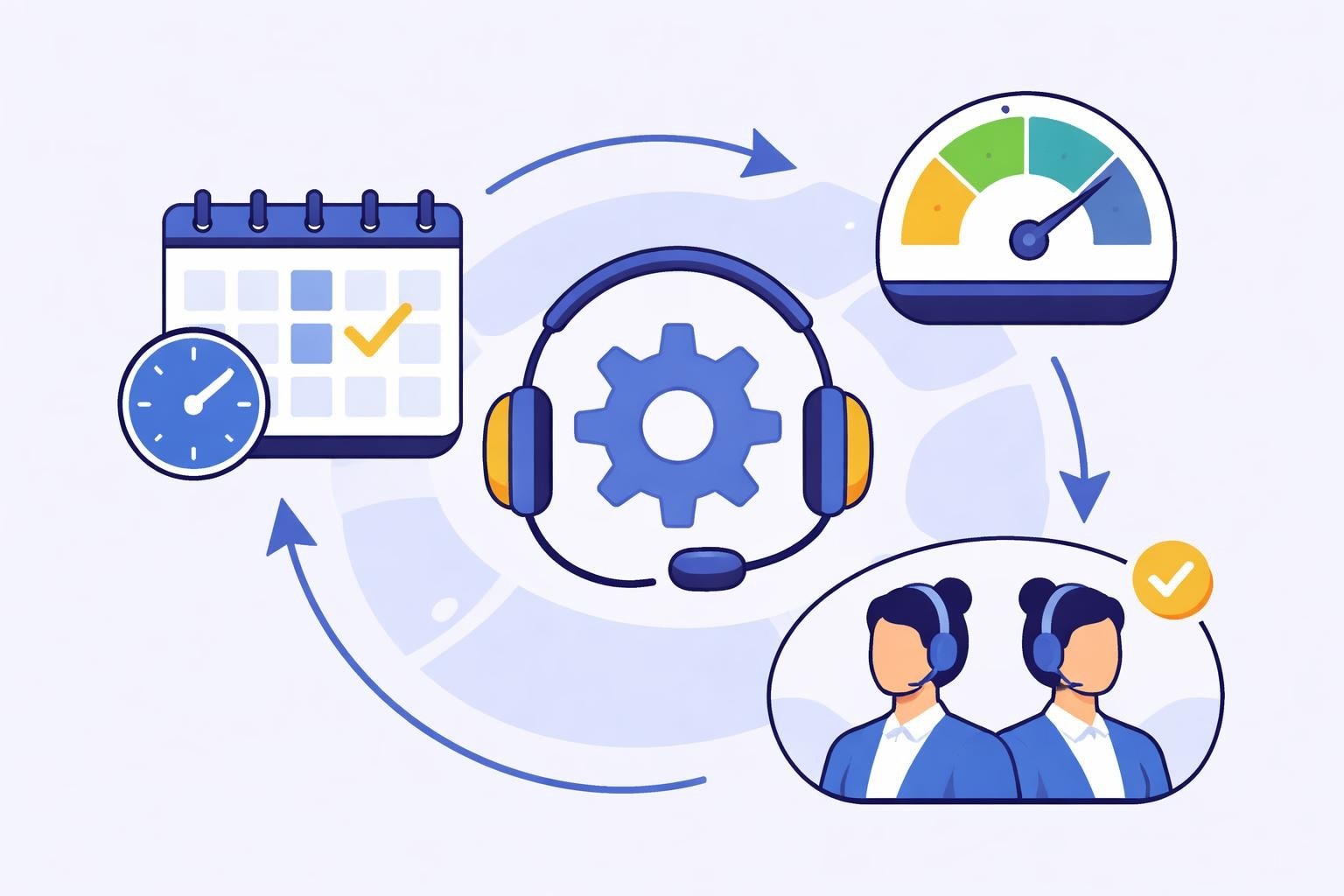
Call centers face unique staffing challenges that demand precision, flexibility, and real-time responsiveness. Managing shifts for dozens or hundreds of agents across multiple time zones, skill sets, and customer demand patterns requires more than spreadsheets and guesswork. Employee scheduling software call center solutions have become essential tools for maintaining service levels while controlling labor costs and supporting employee satisfaction. These specialized platforms help managers forecast demand, assign shifts strategically, and adapt quickly to unexpected changes in call volume or staffing availability.
Understanding Call Center Scheduling Complexity
Call center scheduling differs fundamentally from traditional workforce management. Unlike restaurants or retail stores where foot traffic follows somewhat predictable patterns, call centers must respond to fluctuating demand driven by marketing campaigns, product launches, seasonal trends, and unexpected events.
Service level agreements (SLAs) create additional pressure. Most call centers commit to answering a specific percentage of calls within a defined timeframe, such as 80% of calls within 20 seconds. Missing these targets damages customer satisfaction and potentially violates contractual obligations.
The complexity multiplies when considering agent skill sets. Modern contact centers handle multiple channels including voice, email, chat, and social media. Each agent possesses different competencies, language capabilities, and product knowledge. Effective call center scheduling requires matching these skills to anticipated demand patterns throughout each day.
Critical Scheduling Variables
Employee scheduling software call center platforms must account for numerous interconnected factors:
Historical call volume data across different times, days, and seasons
Average handle time variations by call type and agent experience level
Shrinkage factors including breaks, meetings, training, and system downtime
Agent availability preferences, time-off requests, and contractual restrictions
Occupancy targets balancing productivity with agent burnout prevention
Scheduling Factor | Impact on Staffing | Management Approach |
|---|---|---|
Call Volume Peaks | Requires 20-40% additional staff | Forecast-based scheduling with reserve agents |
Agent Shrinkage | Reduces available capacity by 15-30% | Build buffer into schedules, track actual vs. planned |
Multi-Skill Requirements | Increases scheduling complexity | Cross-training programs and skill-based routing |
Employee Preferences | Affects retention and satisfaction | Flexible scheduling options and self-service tools |
Essential Features of Employee Scheduling Software Call Center Systems
Modern scheduling platforms designed for call centers incorporate sophisticated forecasting algorithms and automation capabilities that transform workforce management from reactive to proactive.
Demand Forecasting and Planning
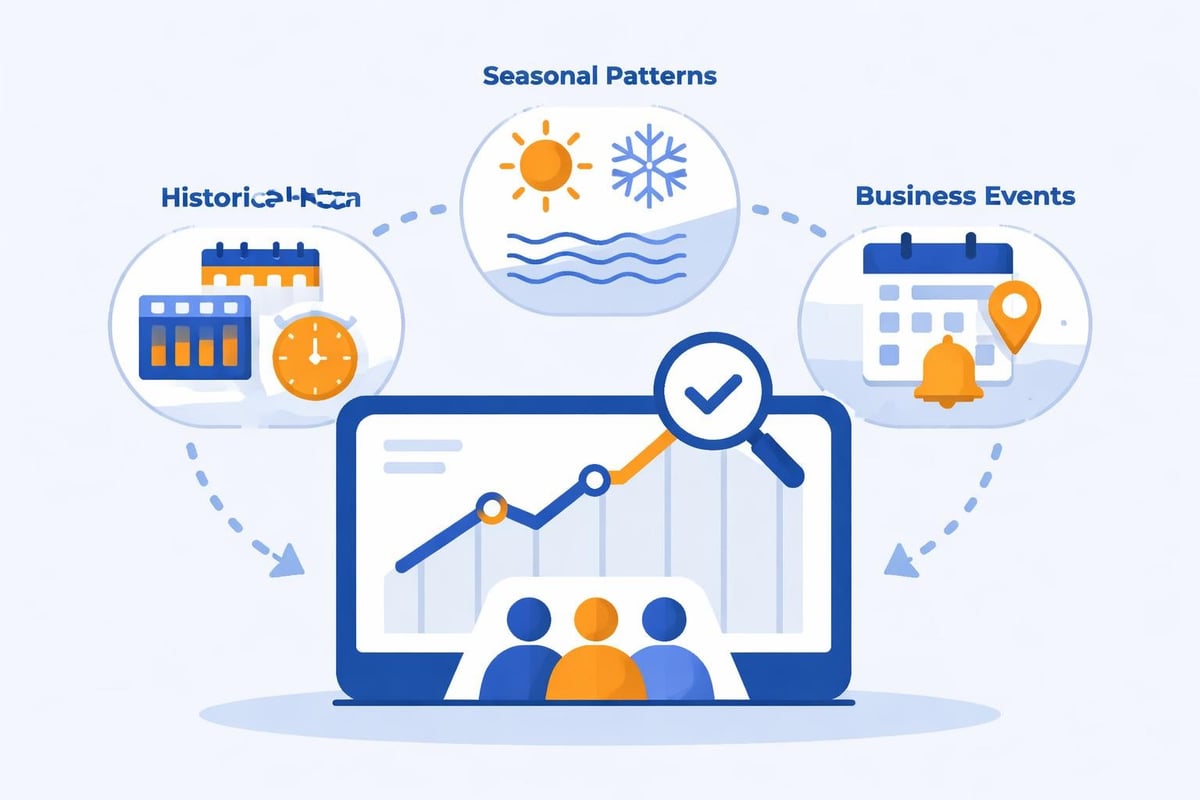
The foundation of effective call center scheduling starts with accurate demand prediction. Advanced forecasting tools analyze years of historical data, identify patterns, and account for special events to generate staffing requirements.
Machine learning algorithms continuously improve forecast accuracy by learning from actual call patterns and adjusting predictions. These systems detect anomalies and alert managers when actual demand deviates significantly from predictions, enabling rapid response.
Integration with business calendars ensures forecasts account for marketing campaigns, product releases, and known events that impact call volume. This proactive approach prevents understaffing during critical periods.
Automated Schedule Generation
Once demand forecasts exist, employee scheduling software call center solutions automatically create optimized schedules that balance service levels, labor costs, and employee preferences. The software considers hundreds of variables simultaneously, accomplishing in minutes what would take human schedulers days to calculate.
Constraint-based optimization ensures schedules comply with labor laws, union agreements, and company policies while maximizing efficiency. The system identifies the minimum staffing required to meet service levels and distributes shifts fairly among available agents.
Self-service portals empower employees to view schedules, request time off, indicate availability preferences, and even participate in shift swapping arrangements with manager approval. This transparency and flexibility significantly improve employee satisfaction and reduce scheduling conflicts.
Implementation Strategies for Maximum ROI
Deploying employee scheduling software call center technology requires careful planning and change management to ensure adoption and realize benefits.
Data Quality and Integration
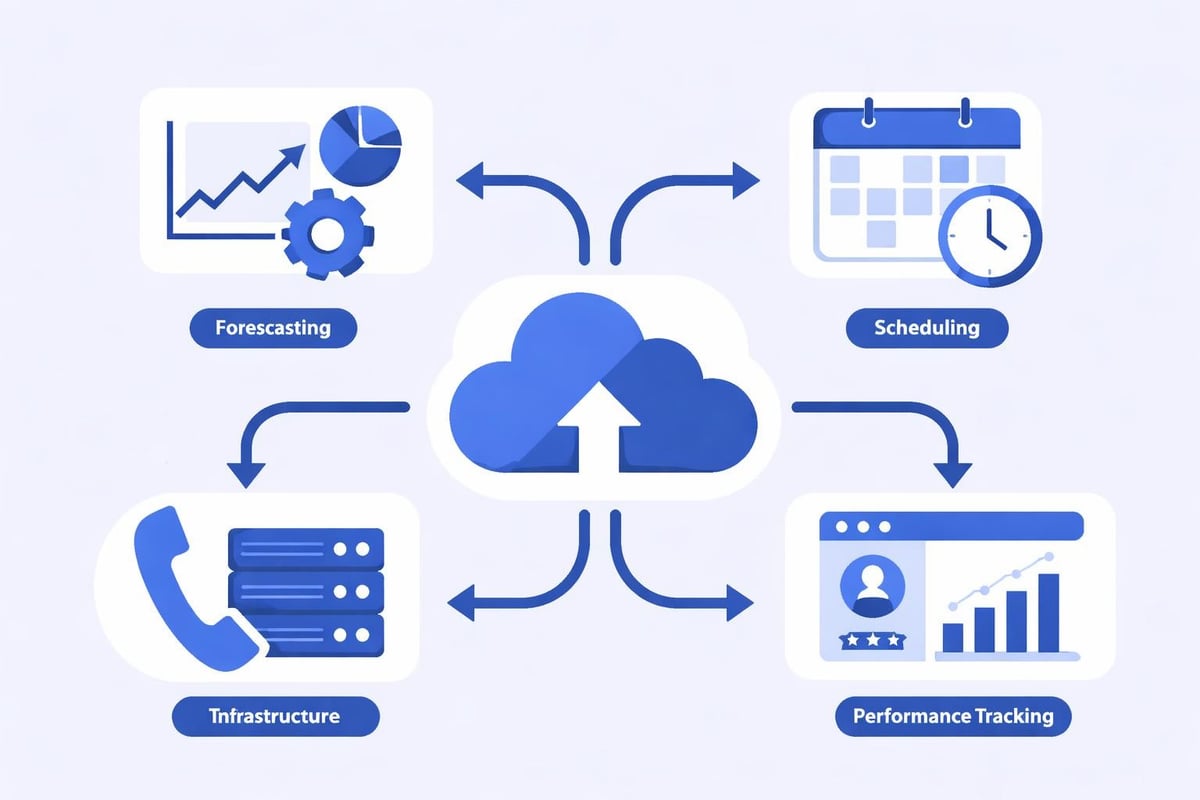
Scheduling accuracy depends entirely on data quality. Before implementing new software, call centers must:
Audit historical data for accuracy and completeness
Integrate phone systems to capture real-time call metrics
Connect workforce management tools for seamless data flow
Establish data governance policies ensuring ongoing quality
Create feedback loops where actual results refine forecasts
Many call centers struggle with siloed systems where scheduling, time tracking, and performance management operate independently. Integrating real-time monitoring with scheduling creates a unified view that enables better decision-making.
Training and Change Management
Technology alone doesn't improve scheduling. Successful implementations invest heavily in training both managers and frontline employees. Managers need to understand how to interpret forecasts, adjust schedules based on real-time conditions, and use the software's optimization features effectively.
Frontline agents require training on self-service tools, schedule adherence expectations, and how their individual performance impacts overall capacity planning. Clear communication about how the system improves their work-life balance increases adoption rates.
Advanced Scheduling Techniques for Call Centers
Beyond basic schedule creation, sophisticated call centers employ specialized strategies to optimize performance and employee satisfaction.
Skill-Based Scheduling
Modern contact centers rarely employ single-skilled agents. Employee scheduling software call center platforms with skill-based routing capabilities assign shifts based on anticipated demand for specific competencies throughout the day.
Cross-training programs expand the scheduling flexibility by creating multi-skilled agents who can handle various call types. However, this introduces complexity as the system must track proficiency levels across multiple skills and schedule accordingly. Best practices for workforce management emphasize strategic agent assignment based on both availability and capability.
Skill Level | Scheduling Priority | Typical Assignment |
|---|---|---|
Tier 3 Specialists | Peak complexity hours | Escalations and technical issues |
Tier 2 Experienced | High volume periods | Standard calls with occasional complexity |
Tier 1 New Hires | Moderate volume hours | Basic inquiries with supervisor support |
Multi-Skilled Veterans | Flexible coverage | Fill gaps across multiple queues |
Flexible Scheduling Models
Traditional fixed-shift models increasingly give way to flexible arrangements that benefit both call centers and employees. Employee scheduling software call center systems enable various flexibility options:
Compressed workweeks where agents work longer shifts fewer days
Split shifts accommodating multiple peak periods
Part-time and variable hour contracts providing surge capacity
Remote work schedules expanding the talent pool geographically
Implementing call center scheduling best practices requires balancing operational needs with employee preferences. Software platforms that incorporate employee input into schedule generation achieve higher adherence rates and lower turnover.
Real-Time Schedule Adjustments
Even perfect forecasts encounter unexpected variations. Severe weather, viral social media issues, or system outages create sudden call volume spikes. Employee scheduling software call center solutions with real-time monitoring capabilities detect these situations immediately and facilitate rapid response.
Automated alerting notifies managers when actual conditions deviate from forecasts beyond acceptable thresholds. The system recommends adjustments such as extending shifts, calling in reserve agents, or temporarily redirecting skilled staff from other tasks.
Mobile applications enable managers to communicate schedule changes instantly and track agent responses. This agility minimizes service level disruptions and prevents long customer wait times during unexpected situations.
Measuring Scheduling Effectiveness
Implementing employee scheduling software call center technology provides extensive data for performance measurement and continuous improvement.
Key Performance Indicators
Successful call centers track multiple metrics to evaluate scheduling accuracy and effectiveness:
Schedule adherence measuring how closely agents follow assigned schedules
Occupancy rates showing the percentage of logged-in time agents spend handling calls
Service level achievement tracking SLA compliance throughout each day
Forecast accuracy comparing predicted versus actual call volumes
Employee satisfaction scores reflecting schedule quality and work-life balance
Schedule adherence deserves particular attention as it directly impacts capacity planning accuracy. When agents consistently deviate from schedules through extended breaks or early departures, even perfect forecasts fail to deliver adequate staffing. Monitoring schedule adherence enables targeted coaching and system refinements.

Continuous Improvement Processes
Employee scheduling software call center platforms generate rich datasets enabling systematic improvement. Monthly reviews should analyze:
Forecast accuracy trends identifying consistent over or under-predictions
Schedule adherence patterns revealing training opportunities or policy issues
Peak period performance ensuring adequate coverage during critical times
Employee feedback gathering insights on schedule quality and fairness
Cost per contact trends measuring labor efficiency improvements
Regular calibration sessions between workforce management teams and operations leaders ensure scheduling practices evolve with changing business needs. Comprehensive call center management approaches integrate scheduling with quality assurance, coaching, and performance management for holistic optimization.
Cost Management and Labor Optimization
While service quality drives call center scheduling, cost control remains critically important. Employee scheduling software call center solutions provide powerful tools for managing labor expenses without sacrificing customer experience.
Overtime Prevention and Control
Unplanned overtime creates budget overruns and reduces profitability. Scheduling software prevents overtime through several mechanisms:
Automated alerts warn managers when approaching weekly hour thresholds, enabling proactive schedule adjustments. The system suggests alternative coverage options using part-time staff or redistributing work among team members below overtime limits.
Historical analysis identifies patterns where overtime occurs regularly, indicating structural staffing gaps rather than temporary fluctuations. Similar to managing labor costs for restaurants, call centers benefit from understanding their labor patterns and making strategic hiring decisions.
Optimizing Staffing Mix
Employee scheduling software call center platforms enable sophisticated staffing mix optimization combining full-time, part-time, and contingent workers. Each employment category offers different cost structures and flexibility characteristics.
Part-time agents provide cost-effective surge capacity during predictable peak periods without the expense of full-time salaries and benefits during slower hours. However, they require additional training investment and may have lower skill levels initially.
Contingent or on-call staff offer maximum flexibility for unpredictable demand spikes but typically command premium hourly rates. The scheduling software calculates the optimal balance based on demand variability and cost differentials.
Staffing Type | Cost Level | Flexibility | Best Use Case |
|---|---|---|---|
Full-Time Core | Moderate | Low | Base coverage and skill development |
Part-Time Regular | Lower | Moderate | Predictable peak periods |
On-Call/Contingent | Higher | High | Unexpected volume spikes |
Remote Workers | Variable | High | Extended hours and geographic coverage |
Integration with Broader Workforce Management
Employee scheduling software call center functionality works best when integrated within comprehensive workforce management ecosystems addressing performance, quality, and development.
Performance Management Integration
Scheduling decisions should consider individual agent performance metrics. High-performing agents might receive preferred shift assignments as recognition, while struggling agents get scheduled during periods with stronger supervisory support available.
Quality scores from call monitoring influence scheduling assignments. Agents with consistently high customer satisfaction ratings handle premium customer segments or complex issues requiring empathy and problem-solving skills.
Tracking key performance indicators across the workforce reveals which agents excel in different situations, enabling more strategic schedule assignments that match talent to opportunity.
Training and Development Coordination
New hire training significantly impacts scheduling capacity. Employee scheduling software call center systems account for training schedules, gradually increasing new agent hours as they complete certification milestones.
Ongoing coaching sessions require scheduling accommodation. The software reserves time for one-on-one meetings, team huddles, and skill development activities without compromising service levels. Streamlined training approaches integrated with scheduling ensure consistent skill development across the workforce.
Technology Evolution and Future Trends
Employee scheduling software call center capabilities continue advancing rapidly with artificial intelligence, predictive analytics, and automation becoming increasingly sophisticated.
AI-powered forecasting now considers external variables like weather, economic indicators, and social media sentiment to predict demand fluctuations with unprecedented accuracy. These systems learn continuously, adapting to changing patterns without manual intervention.
Predictive attrition modeling identifies agents at high turnover risk based on scheduling patterns, enabling proactive retention interventions. When the system detects declining schedule adherence or increased time-off requests, it alerts managers to potential disengagement before resignation occurs.
Automated self-healing schedules represent the next frontier where software automatically adjusts to real-time conditions, reassigning work and extending or reducing shifts based on current demand without manager intervention. These systems maintain service levels while respecting employee preferences and regulatory constraints.
Effective call center scheduling requires balancing service quality, cost efficiency, and employee satisfaction through data-driven decision-making and flexible processes. While these principles apply across customer service environments, the specific tools and approaches vary by industry. Heybegin provides smart scheduling and time tracking solutions specifically designed for restaurants, cafes, pubs, and other service industries, helping businesses simplify scheduling, track hours in real-time, and reduce labor costs with the same strategic approach that makes call centers successful.