Staff Schedule: Best Practices for Service Industry Success

Master staff schedule management for restaurants and cafes. Learn proven strategies to reduce labor costs, improve efficiency, and boost team morale.
Managing an effective staff schedule in the service industry requires balancing multiple priorities simultaneously. Restaurant managers, cafe owners, and pub operators face the constant challenge of ensuring adequate coverage during peak hours while controlling labor costs and maintaining employee satisfaction. A well-structured staff schedule not only drives operational efficiency but also contributes to better customer service, reduced turnover, and improved profitability. The difference between a poorly planned schedule and an optimized one can mean the difference between chaos and smooth operations during your busiest shifts.
Understanding the Core Components of Staff Scheduling
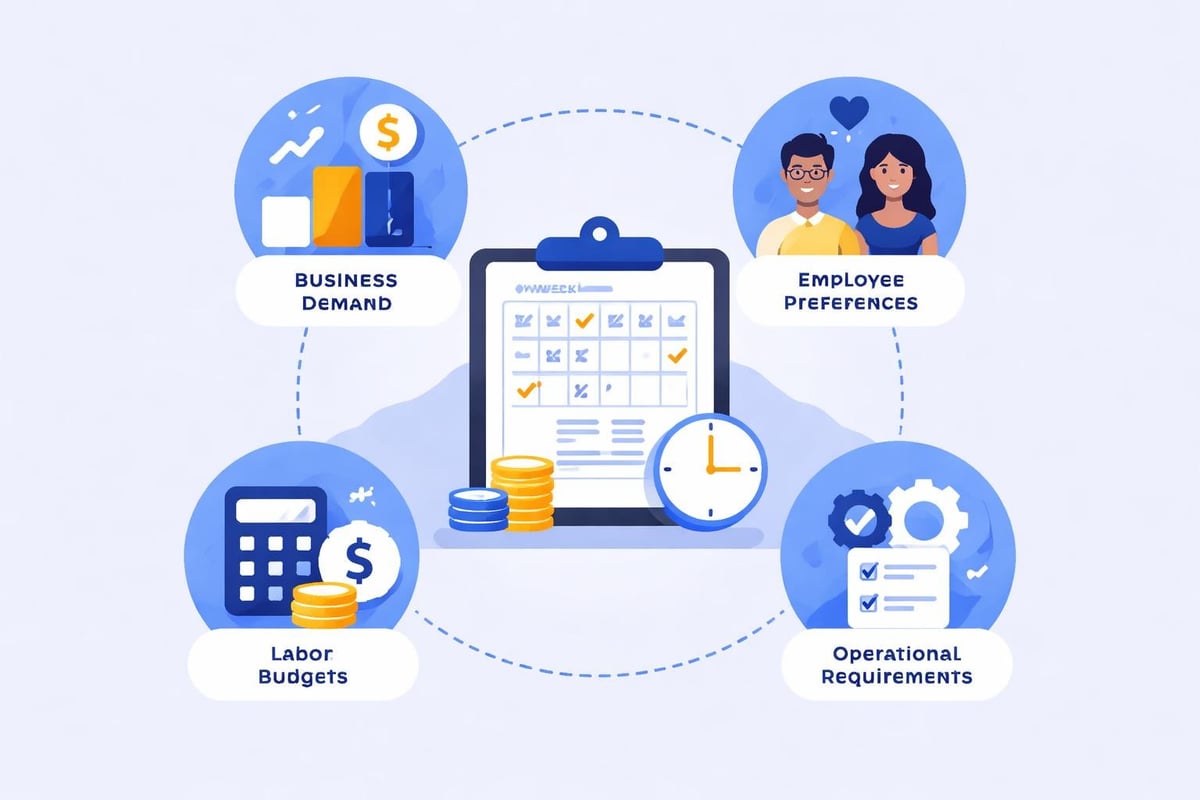
Creating a staff schedule involves more than simply assigning shifts to available employees. Strategic scheduling requires careful consideration of business forecasting, employee skills, labor law compliance, and budget constraints.
Successful scheduling begins with accurate demand forecasting. Restaurant and cafe managers must analyze historical sales data, reservation patterns, and seasonal trends to predict staffing needs. This analysis helps prevent both understaffing during rush periods and overstaffing during slower times.
Key Elements That Impact Scheduling Decisions
Several factors directly influence how managers build their schedules:
Sales volume patterns and customer traffic forecasts
Employee availability and time-off requests
Skill level requirements for different positions
Labor budget constraints and cost targets
Legal compliance with overtime and break regulations
Peak hours and special events that require additional coverage
Research on shift work scheduling in healthcare settings demonstrates that flexible and equitable scheduling practices significantly improve job satisfaction and reduce turnover intentions, principles equally applicable to the restaurant industry.
Strategic Approaches to Building Better Schedules
The foundation of effective scheduling rests on developing clear systems and processes. Rather than creating schedules reactively each week, successful managers implement structured approaches that streamline the entire process.
Implementing a Rotating Schedule System
Rotating schedules ensure fairness by distributing desirable and less desirable shifts evenly among team members. This approach prevents burnout from consistently working difficult shifts and helps maintain team morale.
Benefits of rotation include:
Equal distribution of weekend and evening shifts
Opportunities for all staff to work high-tip periods
Reduced perception of favoritism
Better work-life balance for employees
However, rotation systems require careful planning to maintain consistency for regular customers who prefer seeing familiar faces during their typical visit times.
Balancing Seniority and Flexibility
When designing your staff schedule, consider both seniority-based preferences and the need for flexibility. According to proven employee scheduling strategies, successful managers balance giving experienced employees first choice of shifts while ensuring newer team members receive adequate training hours and development opportunities.
Scheduling Approach | Advantages | Challenges |
|---|---|---|
Seniority-based | Rewards loyalty, clear hierarchy | May limit flexibility, can demotivate new hires |
Skills-based | Ensures qualified coverage | Requires detailed competency tracking |
Availability-first | Maximizes employee satisfaction | May not align with business needs |
Hybrid approach | Balances multiple priorities | Requires sophisticated planning tools |
Optimizing Labor Costs Through Smart Scheduling
One of the most critical aspects of staff schedule management is controlling labor expenses while maintaining service quality. Labor costs for restaurants typically represent 25-35% of total revenue, making scheduling decisions financially significant.
Calculating Optimal Staffing Levels
Determining the right number of employees for each shift requires analyzing your sales per labor hour ratio. This metric helps identify whether you're scheduling efficiently or overstaffing during slower periods.
To calculate ideal staffing:
Review historical sales data for each day part
Calculate average transactions per hour
Determine labor hours needed based on service standards
Factor in skill mix requirements
Adjust for seasonal variations and special events
Advanced scheduling for restaurants goes beyond simple headcount and considers the productivity and speed of individual team members.
Managing Split Shifts and Overtime
Split shifts can help control labor costs during the slow periods between lunch and dinner rushes. However, they present challenges for employee satisfaction and may increase turnover if overused.
Smart overtime management involves:
Setting automatic alerts when employees approach overtime thresholds
Cross-training staff to provide coverage flexibility
Building schedules that distribute hours evenly
Planning ahead for predictable busy periods
Maintaining a reliable on-call pool for unexpected needs
Studies on anesthesia staff scheduling optimization reveal that strategic shift length management reduces both labor costs and employee fatigue, insights that translate directly to food service operations.
Technology Solutions for Schedule Management
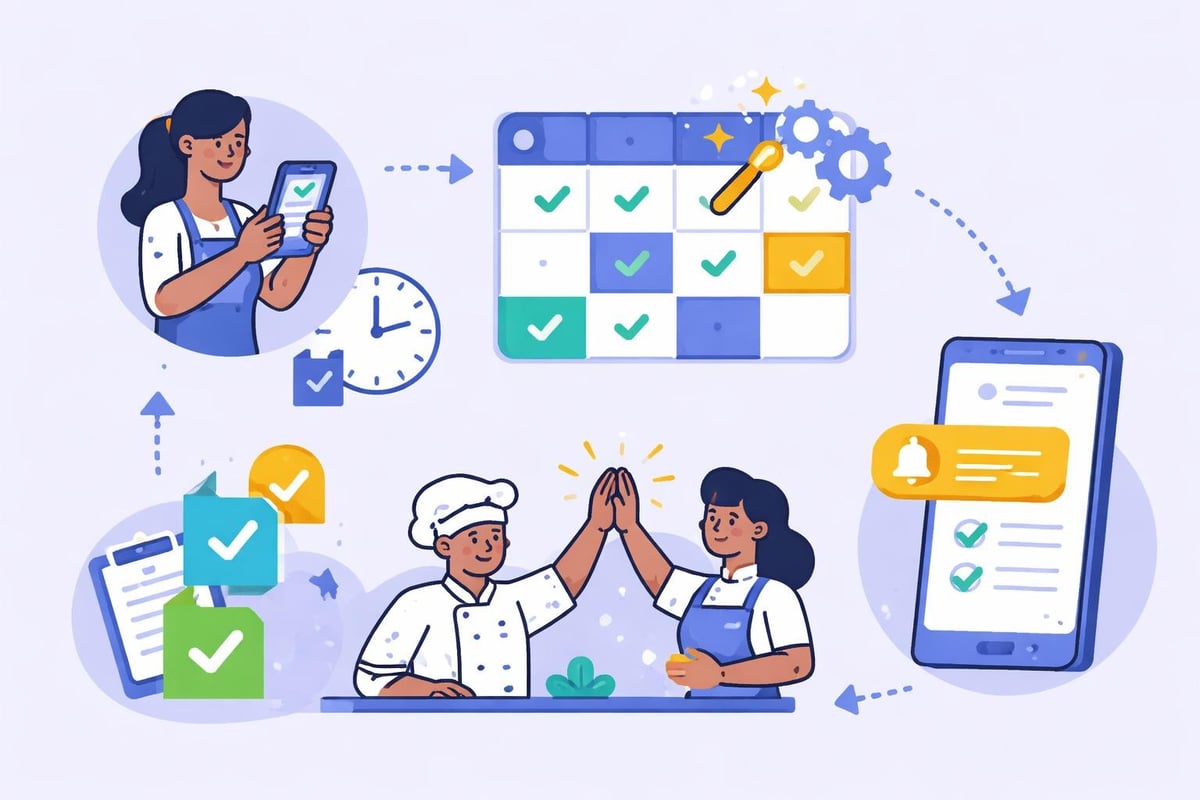
Modern scheduling software has transformed how service industry managers create and manage their staff schedules. Digital tools eliminate many manual processes while providing real-time visibility and communication capabilities.
Essential Features of Scheduling Software
The right technology platform streamlines the entire scheduling workflow. When evaluating solutions, prioritize tools specifically designed for restaurant and service industry needs.
Key capabilities include:
Drag-and-drop schedule building with visual shift assignments
Automated conflict detection for double-bookings and availability issues
Mobile access for both managers and employees
Time-off request management with approval workflows
Real-time schedule updates that notify affected staff immediately
Labor cost tracking integrated with schedule creation
Shift swap functionality that maintains manager oversight
Integration with Time Tracking and Payroll
An integrated staff schedule system that connects with time tracking creates a seamless workflow from scheduling through payroll processing. This integration ensures scheduled hours align with actual worked hours and simplifies timesheet approval.
Heybegin offers comprehensive scheduling and time tracking designed specifically for restaurants, cafes, and service businesses, automating the connection between planned schedules and actual labor hours.
Building Employee-Centric Schedules
While business needs drive scheduling decisions, considering employee preferences improves retention and job satisfaction. Research on integrating nurse preferences into AI-based scheduling emphasizes that fairness, flexibility, and transparency significantly enhance operational efficiency alongside employee satisfaction.
Collecting and Incorporating Availability
Establishing a clear process for employees to submit their availability prevents last-minute conflicts and reduces schedule changes. Set specific deadlines for availability submissions and communicate consequences for late requests.
Best practices for managing availability:
Require availability updates at least two weeks before schedule publication
Use digital forms that automatically update your scheduling system
Distinguish between hard conflicts (cannot work) and preferences (prefer not to work)
Honor genuine availability constraints while educating staff on business needs
Address patterns of limited availability that impact scheduling fairness
Advance Schedule Publication
Publishing schedules well in advance provides employees the predictability they need to manage their personal lives. Many jurisdictions now require minimum advance notice, typically ranging from one to two weeks.
Benefits of early schedule publication:
Reduced stress and improved work-life balance for staff
Fewer last-minute availability conflicts
Time for employees to arrange shift swaps if needed
Demonstrates respect for employee time
Compliance with predictive scheduling laws
Handling Schedule Changes and Emergencies
Even the most carefully crafted staff schedule requires adjustments. No-shows, sudden illness, unexpected busy periods, and personal emergencies necessitate quick schedule modifications.
Creating a Backup Coverage System
Establish clear protocols for managing schedule changes before emergencies arise. A structured system reduces stress and ensures consistent coverage.
Situation | Response Protocol | Communication Method |
|---|---|---|
Called in sick (4+ hours notice) | Contact on-call list in rotation order | Text message with shift details |
No-show | Immediate manager coverage, then call backup staff | Phone calls for urgency |
Unexpected rush | Call part-timers, offer overtime to current staff | Group text to available pool |
Planned absence | Schedule replacement at creation time | Standard schedule notification |
Shift Swap Policies and Procedures
Allowing employees to swap shifts provides flexibility while maintaining coverage. However, unmanaged swaps can create scheduling chaos and labor cost overruns.
Effective shift swap guidelines include:
Requiring manager approval for all swaps
Ensuring the replacement employee has necessary skills
Maintaining the same total labor hours and costs
Setting deadlines for swap requests (e.g., 24 hours before shift)
Documenting all changes in the official schedule
Measuring Schedule Effectiveness
Evaluating your staff schedule performance helps identify improvement opportunities and validates your scheduling decisions. Track specific metrics that reveal both efficiency and employee impact.

Critical Scheduling Metrics
Monitor these indicators to assess your scheduling success:
Labor cost percentage: Total labor costs divided by revenue
Schedule adherence: Percentage of shifts worked as scheduled without changes
Overtime hours: Total and percentage of overtime relative to regular hours
Coverage gaps: Number of shifts that lack adequate staffing
Employee satisfaction: Survey scores related to scheduling fairness and predictability
Schedule publication timing: Days of advance notice provided
Turnover rate: Employee retention compared to scheduling practices
Continuous Improvement Through Data Analysis
Use scheduling data to refine your approach over time. Identify patterns such as days that consistently require schedule adjustments or positions with frequent coverage challenges.
Advanced analytics can reveal insights like which schedule patterns correlate with better sales performance or which shift combinations lead to team conflicts. The multi-objective approach to healthcare workforce scheduling demonstrates how balancing multiple factors including labor costs, coverage, and staff satisfaction creates superior outcomes.
Compliance and Legal Considerations
Staff schedule creation must account for various labor laws and regulations. Non-compliance risks penalties, lawsuits, and damage to your business reputation.
Understanding Labor Law Requirements
Familiarize yourself with federal, state, and local regulations affecting scheduling:
Meal and rest break requirements based on shift length
Overtime calculation rules (typically hours over 40 per week)
Predictive scheduling laws requiring advance notice in some cities
Minor work restrictions on hours and times for employees under 18
On-call compensation requirements in certain jurisdictions
Adequate rest periods between closing and opening shifts
Documentation and Record Keeping
Maintain detailed records of all schedules, changes, time-off requests, and employee acknowledgments. This documentation protects your business in case of disputes and demonstrates good faith compliance efforts.
Many modern scheduling platforms automatically maintain these records, creating an audit trail that includes who made changes, when modifications occurred, and what approvals were obtained.
Training Managers on Scheduling Best Practices
Effective staff schedule management requires skill development. Invest in training your management team on both the technical aspects of your scheduling system and the strategic thinking required for optimization.
Essential Manager Competencies
Scheduling managers should develop proficiency in:
Forecasting labor needs based on historical data and upcoming events
Balancing competing priorities (cost, coverage, fairness)
Using scheduling software effectively
Communicating schedule expectations clearly
Handling conflicts and emergencies professionally
Recognizing patterns that indicate scheduling problems
Making data-driven adjustments to improve performance
Regular review sessions where managers analyze scheduling outcomes and discuss challenges create opportunities for peer learning and continuous improvement. Research on centralized scheduling effects on nursing staff shows that proper implementation and training significantly impact productivity and retention.
Seasonal and Special Event Scheduling
Restaurant and service industry businesses experience significant demand fluctuations. Your staff schedule must adapt to these variations while maintaining team stability.
Planning for High-Volume Periods
Prepare for predictable busy seasons by:
Analyzing previous year's sales and labor data
Recruiting and training additional staff in advance
Offering incentives for working high-demand shifts
Increasing hours for existing reliable employees
Restricting time-off during peak periods (with advance notice)
Managing Slow Periods
During slower seasons, maintain team engagement while controlling costs:
Reduce hours equitably across the team rather than cutting specific individuals
Use downtime for training, deep cleaning, and maintenance projects
Cross-train staff to increase versatility
Consider temporary schedule reductions with clear end dates
Communicate business realities transparently to build understanding
The approach to holiday staff scheduling for anesthesiologists offers insights into optimizing holiday assignments with fairness considerations that apply equally to restaurant holiday scheduling challenges.
Mastering staff schedule management transforms your service business by reducing costs, improving employee satisfaction, and ensuring consistent customer service. The strategies outlined above provide a framework for developing scheduling practices that balance business requirements with team needs. Heybegin delivers intelligent scheduling solutions purpose-built for restaurants, cafes, and service industry businesses, automating complex scheduling tasks while providing the flexibility and control managers need to optimize their operations. Start building better schedules today and experience the difference that smart scheduling technology makes for your business.