Time Management and Scheduling for Service Businesses
Master time management and scheduling in restaurants and service industries. Learn proven strategies to optimize workflows and reduce labor costs.
Managing a restaurant, cafe, or pub requires juggling countless responsibilities simultaneously. From coordinating staff schedules to ensuring adequate coverage during peak hours, effective time management and scheduling forms the backbone of successful service industry operations. When managers master these skills, they reduce labor costs, improve employee satisfaction, and deliver consistent customer experiences. The difference between a chaotic shift and smooth service often comes down to how well you plan, allocate, and track time across your entire operation.
Understanding Time Management Fundamentals in Service Industries
Time management and scheduling in hospitality environments differs significantly from traditional office settings. Service businesses operate with variable demand patterns, requiring flexible staffing approaches that adapt to daily fluctuations. Rush hours demand maximum coverage, while slower periods need minimal staff to control costs.
The Unique Challenges of Restaurant Scheduling
Restaurant managers face obstacles that other industries rarely encounter. Unlike predictable 9-to-5 workplaces, service establishments experience dramatic volume swings throughout the day and week. Weekend brunch crowds differ vastly from Tuesday afternoon foot traffic, and seasonal variations add another complexity layer.
Employee availability creates another scheduling puzzle. Service workers often maintain multiple jobs, pursue education, or manage family responsibilities that require flexible scheduling arrangements. Balancing these individual needs with business requirements while maintaining fair labor practices demands sophisticated time management best practices tailored specifically for hospitality contexts.

Labor regulations introduce additional constraints. Managers must navigate overtime rules, break requirements, and minimum staffing ratios while keeping wages within budget parameters. Understanding how to manage labor costs for restaurants becomes essential for maintaining profitability without sacrificing service quality.
Core Principles of Effective Time Allocation
Several foundational principles guide successful time management and scheduling approaches. These concepts apply across service industries but prove particularly valuable in high-pressure hospitality environments.
Prioritization stands as the first principle. Not all tasks carry equal weight or urgency. Categorizing responsibilities by importance and deadline helps managers focus energy where it generates maximum impact. Pre-shift preparation takes precedence over administrative tasks when doors open in thirty minutes.
Planning ahead reduces reactive scrambling. Creating weekly schedules several days in advance gives employees adequate notice and allows time for adjustment requests. Forward-thinking managers identify potential conflicts before they become emergencies.
Building Structured Daily Workflows
Establishing consistent routines transforms chaotic operations into predictable processes. Morning managers might follow this sequence:
Review previous shift notes and incident reports
Verify staff arrivals and address last-minute callouts
Conduct opening checklist inspections
Brief the team on daily specials and priorities
Monitor initial service quality during opening hours
This structured approach, supported by principles outlined in comprehensive time management strategies, ensures nothing falls through the cracks during transition periods.
Time Block | Priority Activities | Secondary Tasks |
|---|---|---|
Pre-opening (6-9 AM) | Staff coordination, inventory checks, prep supervision | Administrative emails, supply orders |
Peak service (11 AM - 2 PM) | Floor management, quality control, problem resolution | None (full focus on service) |
Afternoon lull (2-5 PM) | Staff training, deep cleaning, next-day preparation | Vendor meetings, paperwork |
Evening rush (5-10 PM) | Service oversight, customer engagement, team support | Minimal administrative work |
Implementing Time Blocking Strategies
Time blocking provides a powerful framework for managing both personal productivity and team scheduling. This technique involves dedicating specific time segments to particular activities, eliminating the inefficiency of constant task-switching.
For restaurant managers, time blocking might mean reserving 30 minutes each morning exclusively for schedule adjustments and communication. During this protected period, managers handle shift swaps, review availability requests, and confirm coverage for the coming days. This focused approach proves more efficient than addressing scheduling issues sporadically throughout the day.
Applying Time Blocking to Staff Schedules
The same principle extends to employee scheduling. Rather than assigning workers to vague "shifts," effective managers create defined time blocks with clear responsibilities. A server might work the "lunch service block" from 10:30 AM to 3:00 PM, with specific duties for setup, peak service, and breakdown phases.
Time blocking also helps control labor costs by aligning staffing levels with anticipated demand. Instead of scheduling full eight-hour shifts regardless of traffic patterns, managers can create staggered blocks that match coverage to customer volume. This approach, featured in best time management strategies for businesses, prevents both overstaffing during slow periods and understaffing during rushes.

Leveraging Technology for Scheduling Efficiency
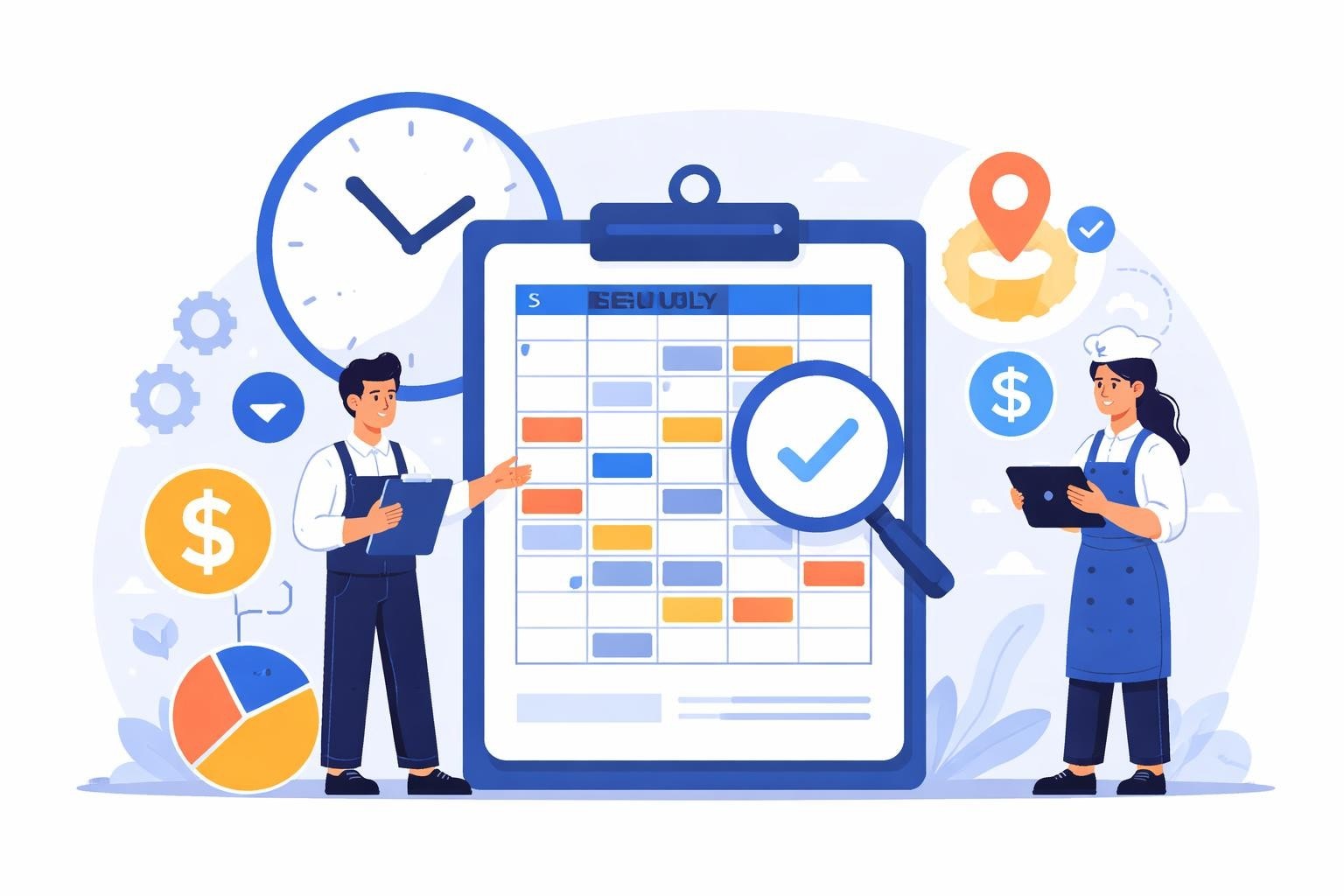
Modern time management and scheduling challenges demand modern solutions. Manual scheduling methods-spreadsheets, handwritten rotas, or text message coordination-create unnecessary friction and errors. Technology platforms designed for scheduling for restaurants streamline these processes significantly.
Digital scheduling systems offer several advantages:
Real-time updates that instantly notify staff of schedule changes
Automated conflict detection preventing double-bookings or understaffing
Mobile accessibility allowing employees to check schedules anywhere
Integrated time tracking connecting scheduled hours with actual work time
Labor cost projections showing budget implications before publishing schedules
Choosing the Right Scheduling Tools
Selecting appropriate scheduling software requires understanding your specific operational needs. Small cafes with consistent staffing patterns need different features than large restaurants with complex shift rotations. Consider factors like team size, location count, integration requirements, and budget constraints.
Research from studies on scheduling preferences and practices reveals that workers strongly prefer systems offering transparency, flexibility, and easy communication. Platforms enabling shift trading, availability updates, and direct manager messaging improve both employee satisfaction and schedule accuracy.
Managing Peak Periods and Demand Fluctuations
Service industry time management and scheduling revolves largely around anticipating and preparing for busy periods. Strategic planning for rushes separates struggling establishments from thriving ones.
Forecasting Techniques
Accurate demand forecasting informs smart scheduling decisions. Analyze historical data to identify patterns:
Day-of-week variations (Friday dinner versus Monday lunch)
Seasonal trends (summer patio season, holiday parties)
Local event impacts (concerts, sports games, festivals)
Weather correlations (rainy day bar traffic, sunny patio crowds)
This data-driven approach allows managers to schedule appropriate staffing levels before demand arrives. Rather than scrambling to call in reinforcements during unexpected rushes, prepared managers have adequate coverage scheduled in advance.
Demand Level | Typical Coverage Ratio | Scheduling Strategy |
|---|---|---|
Low (20-40% capacity) | 1 server per 6-8 tables | Minimum staffing, cross-training |
Medium (40-70% capacity) | 1 server per 4-5 tables | Standard rotation |
High (70-90% capacity) | 1 server per 3-4 tables | All-hands coverage |
Peak (90-100% capacity) | 1 server per 2-3 tables | Maximum staffing with support roles |
Building Flexibility Into Schedules
Even with excellent forecasting, unexpected situations arise. Effective schedules include built-in flexibility mechanisms. On-call arrangements for particularly unpredictable periods, cross-trained staff who can fill multiple roles, and clear protocols for emergency coverage requests all contribute to scheduling resilience.
Balancing Employee Needs With Business Requirements
Time management and scheduling success depends on satisfying both operational demands and workforce expectations. The most efficient schedule means little if it triggers mass resignations or chronic absenteeism.
Fair scheduling practices include:
Consistent advance notice allowing employees to plan personal lives
Equitable shift distribution preventing favoritism perceptions
Reasonable accommodation for educational, family, or health needs
Transparent processes for requesting time off or shift trades
Regular communication about scheduling policies and changes
Research indicates that employees who feel respected in scheduling decisions demonstrate higher engagement, better performance, and longer tenure. Investing time in fair, thoughtful schedule creation pays dividends through reduced turnover and improved morale.
Creating Win-Win Scheduling Scenarios
Smart managers discover creative solutions that simultaneously address business needs and employee preferences. For example, a server passionate about wine education might welcome slower Tuesday shifts that allow time for studying certifications, while another employee preferring maximum earnings takes lucrative Friday nights.
Utilizing employee rota software helps identify these opportunities by tracking preferences, availability patterns, and performance across different shifts. The software can suggest optimal assignments that balance operational requirements with individual employee circumstances.
Monitoring and Optimizing Schedule Performance
Creating schedules represents only half the time management equation. Tracking actual performance against planned schedules reveals optimization opportunities and prevents budget overruns.
Key Metrics to Track
Monitor these scheduling effectiveness indicators:
Actual hours versus scheduled hours identifying chronic early arrivals or late departures
Labor cost percentage measuring wages against revenue
Coverage gaps documenting understaffed shifts
Overtime frequency highlighting scheduling inefficiencies
Callout rates revealing potential morale or health issues
Regular analysis of these metrics, combined with insights from principles of effective time management, enables continuous improvement. Perhaps Tuesday lunch consistently runs understaffed, or Saturday dinner schedules routinely generate excessive overtime. Data reveals these patterns clearly.

Making Data-Driven Adjustments
Once patterns emerge, managers can refine scheduling approaches strategically. If data shows Wednesday evenings requiring less coverage than currently scheduled, reduce staffing levels and redirect those labor hours to proven busy periods. This optimization reduces overall labor costs while improving service during peak times.
Similarly, tracking which employees consistently arrive prepared and perform well during specific shifts informs future scheduling decisions. Match proven performers to critical time slots while developing less experienced staff during lower-pressure periods.
Developing Manager Time Management Skills
Beyond scheduling staff, managers must manage their own time effectively. Service industry leadership involves countless competing demands requiring skilled prioritization and boundary-setting.
Successful managers implement personal time management strategies including:
Dedicated planning time each week for schedule creation and review
Delegation protocols empowering shift leaders and senior staff
Communication boundaries establishing when managers are truly off-duty
Task batching handling similar activities together for efficiency
Regular breaks preventing burnout and maintaining decision quality
The most productive managers recognize they cannot personally handle every situation. Training capable shift supervisors, documenting standard procedures, and trusting the team creates sustainable operations that don't depend entirely on manager presence.
Time Management for Multi-Location Operators
Managers overseeing multiple locations face additional complexity. They must allocate time appropriately across properties while maintaining consistency and quality everywhere. Structured schedules for location visits, standardized operating procedures, and reliable communication systems become essential.
Technology platforms enabling remote schedule management, real-time reporting, and instant communication help multi-unit operators maintain control without physical omnipresence. Managers can review labor costs, approve schedule changes, and monitor time tracking across all locations from any device.
Training Staff on Time Management Principles
Time management and scheduling responsibility doesn't rest solely with managers. Employees who understand time optimization principles contribute to overall operational efficiency.
Provide staff training covering:
Punctuality importance and arrival protocols
Task prioritization during shifts
Efficient workflow organization
Communication expectations for availability changes
Proper time tracking procedures
When the entire team embraces time management principles, operations run smoother. Servers who efficiently organize their sections, cooks who prioritize ticket timing strategically, and hosts who manage seating pace all contribute to successful service.
Building Accountability Systems
Clear expectations paired with consistent accountability drive behavioral change. Establish standards for punctuality, task completion timing, and communication responsiveness. Track adherence and address deviations promptly but fairly.
Recognition systems rewarding excellent time management reinforce positive behaviors. Acknowledging employees who consistently arrive prepared, complete tasks efficiently, and communicate proactively encourages others to follow suit.
Addressing Common Scheduling Pitfalls
Even experienced managers encounter recurring time management and scheduling challenges. Recognizing common mistakes helps avoid them.
Overscheduling during anticipated busy periods wastes labor budget when predicted rushes don't materialize. Conservative scheduling with backup plans proves more cost-effective than automatically maximizing coverage.
Underestimating transition times between shifts creates chaos. Build adequate overlap for proper handoffs, ensuring departing staff can brief incoming colleagues about ongoing situations.
Ignoring employee feedback about schedule preferences breeds resentment. While business needs take priority, completely disregarding worker input damages morale and increases turnover.
Failing to document scheduling decisions creates confusion and perceived unfairness. Maintain clear records explaining why particular assignments were made, especially for coveted or undesirable shifts.
Neglecting legal compliance risks expensive violations. Stay current on labor laws regarding breaks, overtime, minor work restrictions, and predictive scheduling requirements in your jurisdiction.
Adapting Schedules for Seasonal Variations
Service businesses experience dramatic seasonal fluctuations requiring flexible scheduling approaches. Summer patio season demands different staffing than winter months. Holiday periods generate unique challenges distinct from regular operations.
Effective seasonal adaptation involves:
Forecasting seasonal demand changes using historical data and market trends
Recruiting seasonal workers to supplement core staff during busy periods
Reducing hours gradually during slow seasons rather than sudden cuts
Cross-training opportunities during slower periods preparing for busy times
Transparent communication about seasonal schedule expectations
Planning these transitions well in advance prevents last-minute scrambling. Begin recruiting summer staff in spring, not after the rush starts. Communicate winter hour reductions before employees make holiday spending decisions based on summer income levels.
Integrating Time Tracking With Scheduling
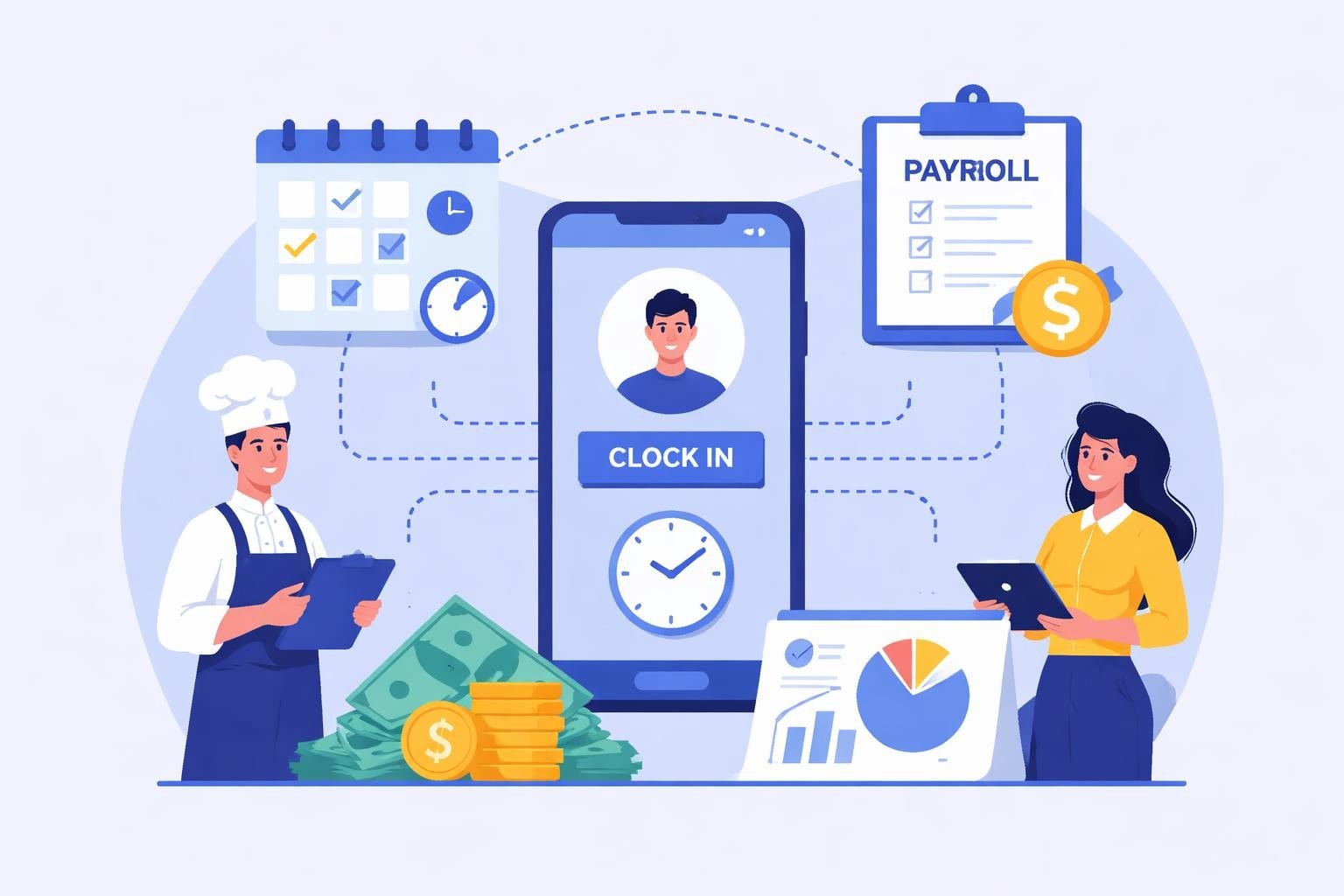
The most effective time management and scheduling systems connect planned schedules with actual worked hours. This integration provides multiple benefits including accurate payroll, labor cost control, and schedule optimization data.
Modern platforms track time automatically through:
Digital clock-in/out systems capturing exact work periods
GPS verification confirming employees are on-site
Break tracking ensuring compliance with labor laws
Task-based time allocation showing how hours distribute across activities
This data flows directly into payroll processing, eliminating manual timesheet calculations and reducing errors. Managers gain real-time visibility into labor costs as shifts progress, enabling proactive adjustments when spending exceeds projections.
Mastering time management and scheduling transforms service industry operations from reactive chaos into proactive efficiency. By implementing structured planning processes, leveraging appropriate technology, and balancing business needs with employee satisfaction, managers create sustainable operations that control costs while delivering excellent service. Heybegin provides smart scheduling and time tracking solutions specifically designed for restaurants, cafes, pubs, and service businesses, helping managers simplify scheduling, track hours accurately, and reduce labor costs through automated, intelligent systems. Take control of your scheduling challenges and discover how the right tools can transform your operations.