Staff Costs: Complete Guide for Restaurant Managers

Master staff costs in your restaurant with proven strategies for tracking, reducing, and optimizing labor expenses while maintaining service quality.
Managing a restaurant, café, or pub means wrestling with one of the industry's most significant expenses: staff costs. These expenses extend far beyond hourly wages, encompassing payroll taxes, benefits, training, turnover, and countless hidden charges that can erode profitability. For service industry managers in 2026, understanding the full scope of workforce expenses and implementing strategic controls makes the difference between sustainable growth and financial struggle. This comprehensive guide explores every dimension of staff costs, from calculation methods to reduction strategies tailored specifically for hospitality businesses.
Understanding the True Scope of Staff Costs
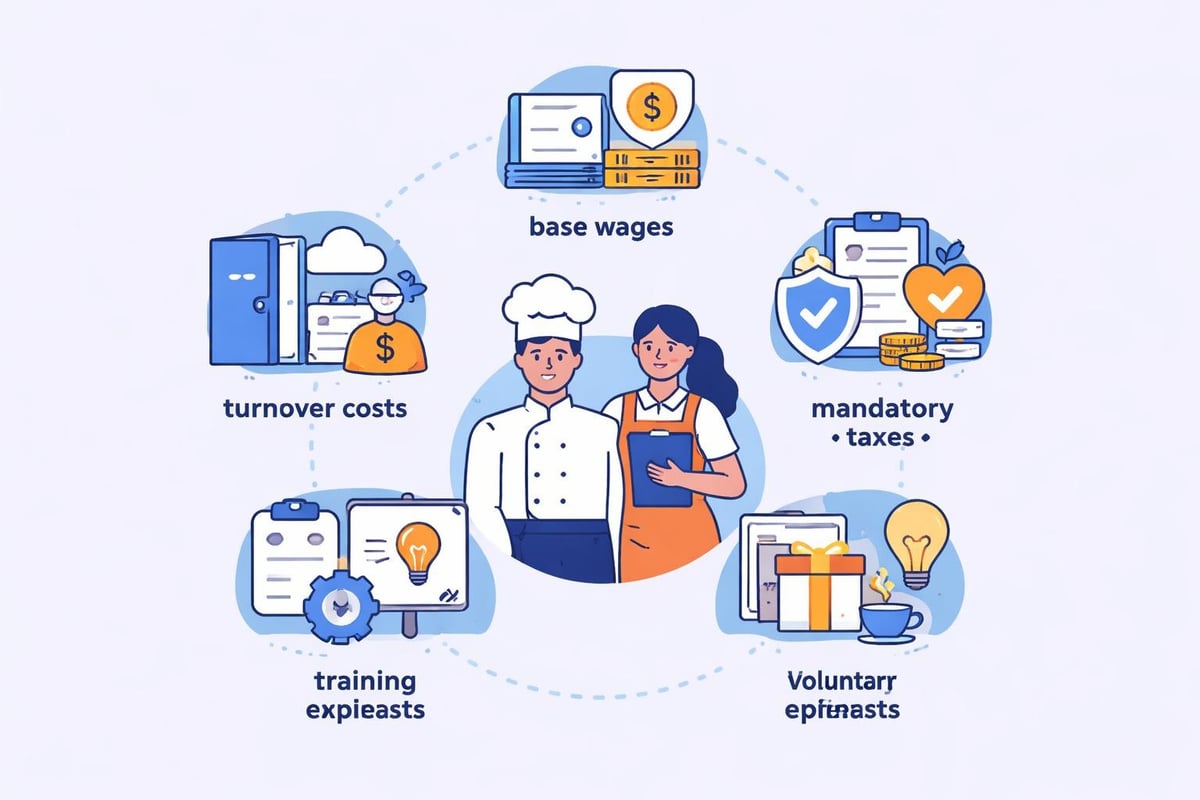
Staff costs represent the total financial investment required to maintain your workforce. Many restaurant managers mistakenly focus solely on gross wages, overlooking the substantial additional expenses that accompany every employee on the payroll.
Direct Compensation Components
The most visible element includes base wages, overtime pay, tips credit where applicable, and shift differentials. Restaurants operating in competitive markets often face pressure to increase hourly rates to attract skilled servers, cooks, and bartenders. These direct wages typically account for 60-70% of total staff costs, but they're just the beginning.
Bonus structures and commission arrangements add another layer. Many establishments incentivize managers with performance bonuses tied to sales targets or cost control metrics, creating variable compensation that fluctuates month to month.
Mandatory Employer Contributions
Every employer must account for statutory obligations that add 10-15% to base compensation. Social Security and Medicare taxes, unemployment insurance, and workers' compensation premiums are non-negotiable expenses. Understanding these full costs of an employee helps managers budget accurately for workforce expansion.
Workers' compensation rates in the restaurant industry typically run higher than many other sectors due to elevated injury risks in commercial kitchens and fast-paced service environments. These premiums vary by state and claims history, making cost control through safety programs financially advantageous.
Voluntary Benefits and Perks
Competitive restaurants offer health insurance, retirement contributions, paid time off, and meal allowances to reduce turnover. While optional, these benefits often determine whether you attract experienced professionals or constantly train inexperienced workers.
Health insurance alone can add $400-800 per employee monthly. Paid time off reduces available working hours while maintaining payroll obligations. Some establishments offer education assistance, transit subsidies, or childcare support to differentiate themselves in tight labor markets.
Calculating Total Staff Costs Accurately
Precise calculation requires systematic tracking of every compensation element. Most restaurants underestimate actual staff costs by 20-30% when they exclude indirect expenses and overhead allocation.
The Formula Framework
Total Staff Costs = Direct Wages + Mandatory Taxes + Benefits + Recruiting/Training + Turnover Costs + Overhead Allocation
This formula provides a comprehensive view, but implementation requires detailed record-keeping. Time tracking systems integrated with scheduling for restaurants ensure accurate wage calculations while minimizing administrative overhead.
Cost Category | Typical Percentage of Base Wage | Annual Cost per $15/hour Employee |
|---|---|---|
Base Wages (2080 hours) | 100% | $31,200 |
Payroll Taxes | 10-12% | $3,432 |
Workers' Comp | 3-8% | $1,872 |
Benefits Package | 15-25% | $6,240 |
Training/Recruiting | 5-10% | $2,340 |
Total Annual Cost | 133-155% | $45,084 |
This calculation assumes full-time employment, which many restaurants avoid to control benefit obligations. However, managing multiple part-time workers increases scheduling complexity and training costs.
Hidden Cost Elements
Uniforms, equipment, licenses, background checks, and onboarding materials add incremental expenses. Employee meals represent significant food cost, particularly in full-service restaurants where staff dining is customary. Break time, pre-shift meetings, and end-of-shift cleanup all represent paid non-productive hours that must be factored into true labor efficiency.
Inefficient scheduling creates unnecessary staff costs through overstaffing during slow periods or excessive overtime during busy shifts. Labor costs for restaurants fluctuate dramatically based on scheduling precision and demand forecasting accuracy.
Benchmarking Against Industry Standards
Successful restaurant operators continuously compare their staff costs against industry benchmarks and high-performing competitors. This competitive intelligence reveals optimization opportunities and validates current spending levels.
Labor Cost Percentages
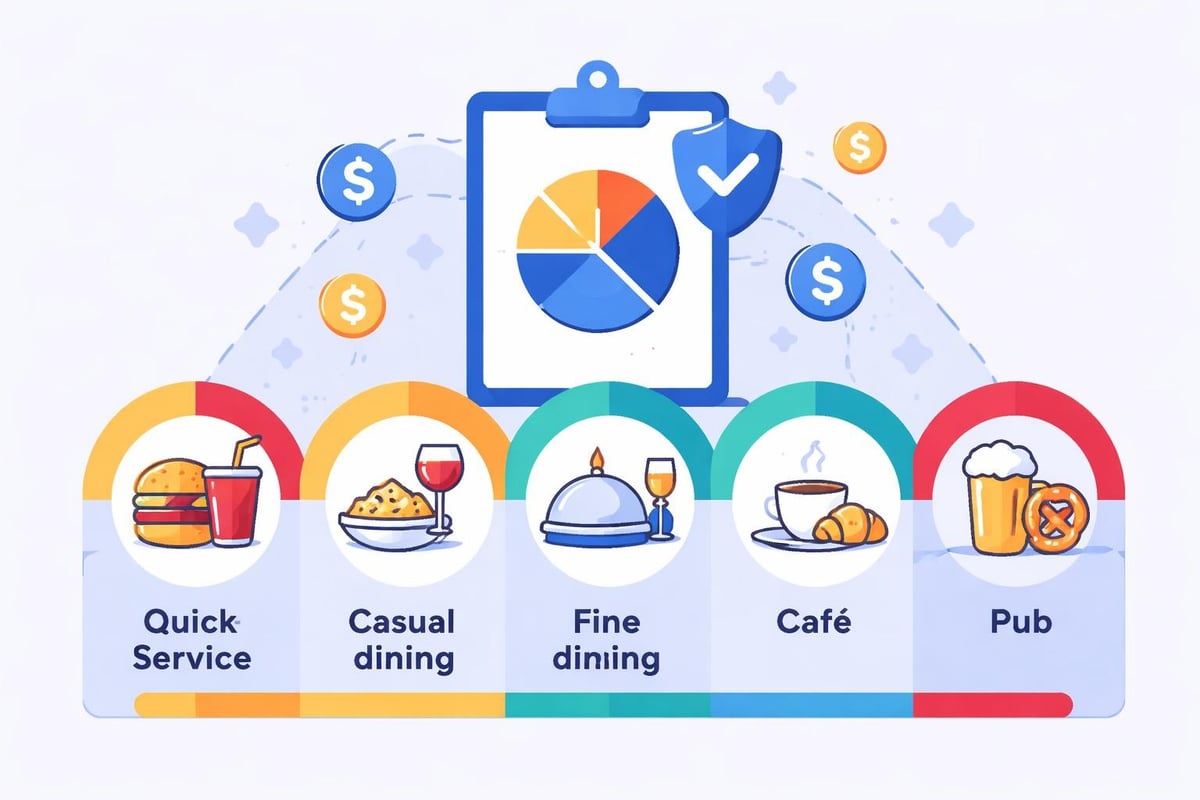
Most full-service restaurants target staff costs between 30-35% of revenue, while quick-service establishments aim for 25-30%. Fine dining operations with extensive service requirements may accept 35-40%, while high-volume cafés with limited table service often achieve 20-25%.
These benchmarks vary significantly by concept, location, and service model. Industry labor cost comparisons provide context for evaluating your performance against similar establishments.
Geography dramatically impacts staff costs. Urban restaurants face higher wages, benefits expectations, and statutory requirements compared to rural operations. Minimum wage variations across states and cities create competitive advantages or disadvantages based solely on location.
Performance Metrics That Matter
Beyond total percentage, sophisticated operators track:
Revenue per labor hour: Total sales divided by total hours worked
Labor cost per cover: Staff costs divided by number of customers served
Productivity ratios: Output measures divided by hours scheduled
Schedule efficiency: Actual hours worked versus scheduled hours
These metrics enable granular analysis identifying which shifts, dayparts, or service styles deliver optimal labor efficiency. Tracking these KPIs weekly or daily allows rapid response to emerging trends before they significantly impact profitability.
Strategies for Reducing Staff Costs Without Sacrificing Quality
Cost reduction in service industries requires surgical precision. Blunt approaches like across-the-board wage cuts or dramatic staff reductions typically backfire, increasing turnover and diminishing customer experience.
Optimizing Scheduling Practices
Strategic scheduling represents the highest-impact, lowest-risk cost reduction approach. Demand forecasting using historical sales data, weather patterns, local events, and seasonal trends enables precise staffing alignment with customer traffic.
Analyze historical sales by day, daypart, and hour
Identify minimum staffing levels for safe, effective service
Create schedules matching anticipated demand curves
Build flexibility through on-call or split shifts
Monitor actual performance and adjust forecasts continuously
Modern employee rota software automates much of this analysis, generating optimized schedules that balance coverage requirements against labor budgets. These systems reduce manager time spent on scheduling while improving accuracy.
Cross-Training and Skills Development
Employees capable of performing multiple roles provide scheduling flexibility that reduces overall headcount requirements. A server who can bartend or a line cook who can expedite creates deployment options that prevent overstaffing.
Cross-training investment pays dividends through reduced staff costs during call-outs, resignations, or demand fluctuations. The initial training expense generates long-term savings through improved schedule efficiency and reduced emergency staffing needs.
Healthcare operations have demonstrated success with cross-training staff optimization strategies that translate well to hospitality environments. Building versatile teams creates resilience against scheduling disruptions while controlling costs.
Reducing Turnover Through Retention
Employee turnover imposes devastating hidden costs. Recruiting expenses, training time, reduced productivity during learning curves, and customer service disruptions during transitions add thousands per departure.
Industry research shows replacing an hourly employee costs 30-50% of annual salary when accounting for all direct and indirect expenses. For a $15/hour position, that represents $9,360-15,600 per turnover event. Reducing annual turnover from 100% to 60% saves dramatic amounts on staff costs.
Retention strategies include:
Competitive compensation aligned with market rates
Flexible scheduling accommodating personal needs
Clear advancement pathways and skills development
Positive workplace culture and recognition programs
Responsive management and employee voice channels
Analyzing turnover reduction strategies reveals that retention initiatives delivering even modest improvements generate substantial return on investment through lowered replacement costs.
Technology Solutions for Staff Cost Management
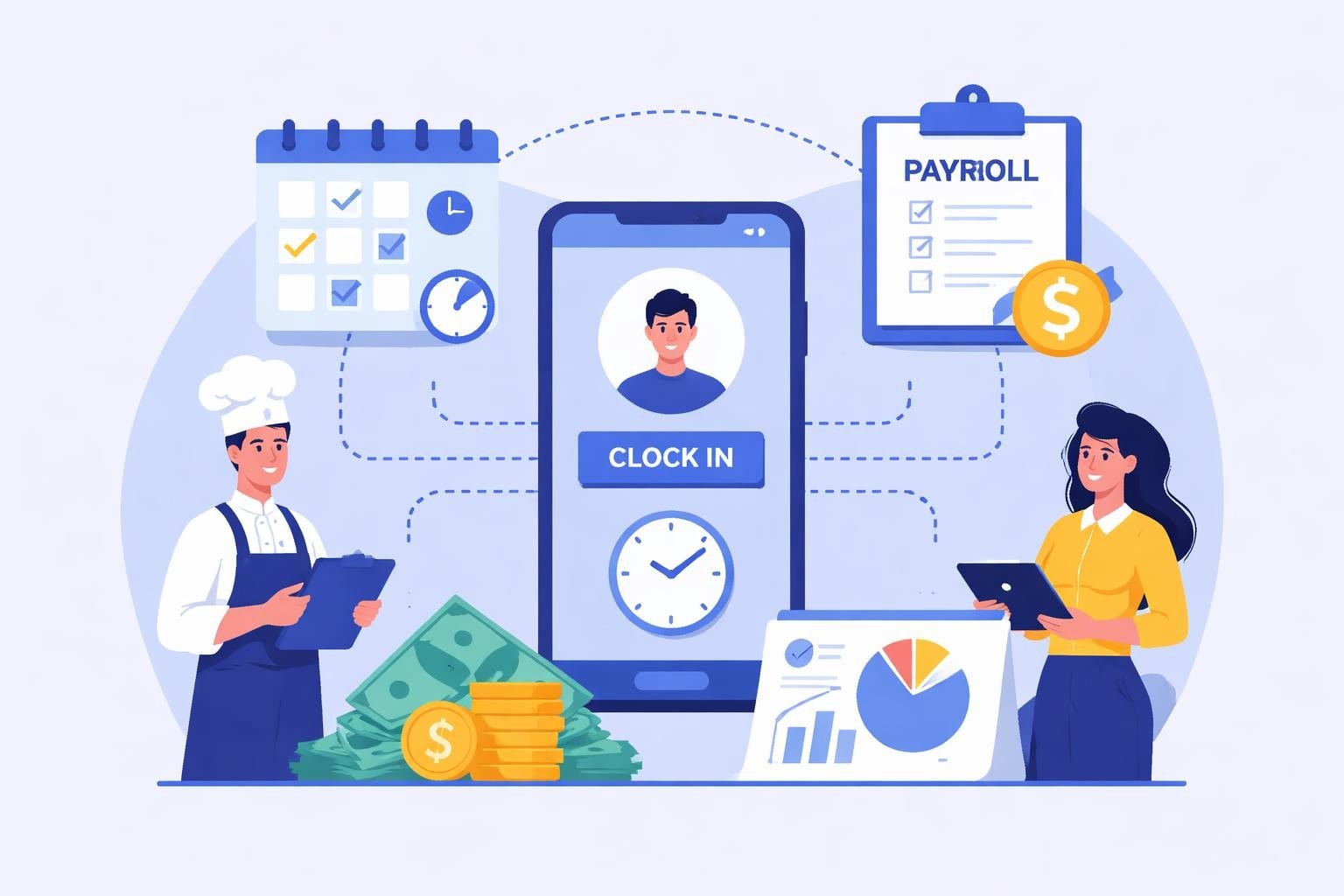
Manual scheduling, time tracking, and payroll processes create inefficiency, errors, and opportunities for time theft. Technology implementation transforms staff cost management from reactive firefighting to proactive optimization.
Automated Time Tracking Systems
Automated systems eliminate buddy punching, track breaks accurately, flag approaching overtime, and generate compliant records for wage-hour audits. Integration with point-of-sale data enables real-time labor percentage monitoring during shifts.
Managers receive alerts when labor costs exceed targets, enabling mid-shift adjustments before financial impact becomes significant. This responsiveness prevents budget overruns that accumulate invisibly throughout pay periods.
Predictive Analytics and AI-Powered Scheduling
Advanced platforms analyze years of operational data to forecast demand with remarkable accuracy. Machine learning algorithms identify patterns humans miss, accounting for weather, local events, holidays, and trend changes.
These systems generate optimal schedules balancing coverage requirements, employee preferences, labor law compliance, and budget constraints simultaneously. What once required 8-10 hours of manager time weekly becomes automated, freeing leadership for customer-facing activities.
Mathematical approaches to task assignment using optimization algorithms ensure balanced workloads while minimizing costs, providing theoretical foundations for practical scheduling solutions.

Mobile Applications for Employees
Employee-facing apps enable shift trading, availability updates, time-off requests, and schedule access without manager intervention. This self-service approach reduces administrative burden while improving employee satisfaction through increased schedule control.
Communication features built into scheduling platforms reduce missed shifts, ensure coverage for call-outs, and streamline the coordination that previously consumed hours of phone calls and text messages.
Labor Law Compliance and Risk Management
Staff costs extend beyond paychecks to include legal compliance, documentation, and risk mitigation. Violations of wage-hour laws, scheduling ordinances, or safety regulations generate fines, lawsuits, and reputational damage that dwarf the cost of proper compliance.
Predictive Scheduling Laws
Numerous cities and states have enacted fair workweek legislation requiring advance schedule posting, predictability pay for last-minute changes, and rest period guarantees. These regulations increase staff costs through reduced scheduling flexibility and mandatory compensation for changes.
Restaurants operating in multiple jurisdictions must track varying requirements for San Francisco, Seattle, Philadelphia, Oregon, and other regulated markets. Automated systems with built-in compliance rules prevent violations that trigger penalties.
Overtime and Break Compliance
Miscalculating overtime, missing required breaks, or incorrectly classifying employees as exempt creates liability exposure. Automated time tracking with built-in rules prevents violations before they occur, protecting both employees and employers.
Class-action wage-hour lawsuits against restaurant chains regularly generate multi-million dollar settlements. Small operators face proportional risk, making compliance systems essential risk management rather than optional convenience.
Strategic Workforce Planning for Long-Term Cost Control
Sustainable staff cost management requires strategic workforce planning aligned with business objectives. Reactive hiring and firefighting approaches inevitably result in bloated headcount, inefficient deployment, and excessive expenses.
Developing Staffing Models
Effective models define required positions, optimal headcount, and scheduling templates for each revenue level. As sales grow, these models guide incremental hiring decisions preventing both understaffing that damages service and overstaffing that erodes profitability.
Position-specific productivity standards establish expectations for output per labor hour. These standards enable objective evaluation of scheduling efficiency and identify underperforming shifts requiring intervention.
Building Flexible Labor Pools
Maintaining a roster of trained on-call or seasonal workers provides surge capacity without permanent headcount increases. These flexible resources handle special events, seasonal peaks, or unexpected absences without the ongoing burden of full-time staff costs.
Some operators partner with staffing agencies for occasional needs, trading higher hourly rates for zero ongoing obligation. Staff augmentation cost analysis helps determine when contingent labor makes financial sense versus direct hiring.
Succession Planning and Internal Development
Growing leadership from within reduces recruiting costs while building institutional knowledge and loyalty. Assistant manager programs, kitchen leadership training, and service captain development create advancement pathways that improve retention and reduce external hiring needs.
Structured training programs create consistency, reduce errors, accelerate new hire productivity, and minimize the quality variations that damage customer experience and generate waste. Using comprehensive employee cost analysis templates helps evaluate the total investment in workforce development against the returns it generates.
Balancing Cost Control with Employee Experience
Excessive cost reduction creates a downward spiral where low compensation drives high turnover, requiring constant recruiting and training that ultimately increases total staff costs. The optimal approach balances fiscal discipline with investment in employee experience.
Creating a Cost-Conscious Culture
Transparency about financial realities helps teams understand why cost control matters. Sharing labor percentage targets, explaining budget constraints, and involving staff in efficiency improvements builds buy-in rather than resistance.
Incentive structures aligning employee interests with cost control generate collaborative problem-solving. Bonus programs rewarding teams for hitting labor targets while maintaining service standards make everyone stakeholders in financial performance.
Investing Where It Matters
Not all staff costs deliver equal value. Premium compensation for skilled positions with direct customer impact or specialized expertise generates better returns than across-the-board raises. Strategic investment in retention for critical roles while maintaining market rates for easily replaced positions optimizes spending.
Quality-of-life improvements through schedule stability, advance notice, and preference accommodation often cost little but dramatically improve retention. Implementing effective staff schedule makers that balance business needs with employee preferences demonstrates respect that builds loyalty.
Measuring Return on Labor Investment
Every dollar spent on staff costs should generate measurable returns through revenue, productivity, quality, or strategic capability. Sophisticated operators evaluate labor spending against these outcomes rather than simply minimizing costs.
Revenue Impact Analysis
Labor investment enables revenue generation through extended hours, additional services, faster table turns, or enhanced experiences that support premium pricing. Calculating incremental revenue per incremental labor dollar identifies growth opportunities worth staffing.
Some establishments discover that modest staff cost increases during peak periods generate disproportionate revenue gains through reduced wait times, improved service quality, or expanded capacity. Others find that maintaining skeleton crews during slow periods preserves profitability despite minimal sales.
Quality and Consistency Metrics
Adequate staffing directly impacts customer satisfaction, online reviews, repeat business, and word-of-mouth recommendations. Understaffing saves immediate labor dollars while sacrificing long-term revenue through degraded experiences and damaged reputation.
Monitoring customer feedback alongside staff cost percentages reveals the inflection point where cost reduction begins damaging quality. Operating slightly above minimum staffing requirements often proves optimal for balancing efficiency with excellence.
Mastering staff costs requires comprehensive understanding, systematic measurement, and continuous optimization across every dimension of workforce management. Success comes from viewing labor not merely as an expense to minimize, but as an investment to optimize for maximum return. Heybegin provides the scheduling and time tracking technology that transforms staff cost management from a monthly struggle to an automated system delivering continuous improvement. Our platform helps restaurants, cafés, and pubs reduce labor expenses while improving schedule quality and employee satisfaction, building the foundation for sustainable profitability.