Time Tracking Reports: Essential Insights for Service Teams
Learn how time tracking reports help restaurants and service businesses reduce labor costs, improve scheduling accuracy, and boost efficiency.
Managing labor costs and optimizing staff efficiency remains one of the most challenging aspects of running a restaurant, cafe, or service-based business. Time tracking reports provide managers with the actionable data they need to make informed decisions about scheduling, budgeting, and workforce management. These reports transform raw time clock data into meaningful insights that directly impact your bottom line, helping you identify overtime patterns, reduce unnecessary labor expenses, and ensure optimal staffing levels during peak and slow periods.
Understanding Time Tracking Reports and Their Core Components
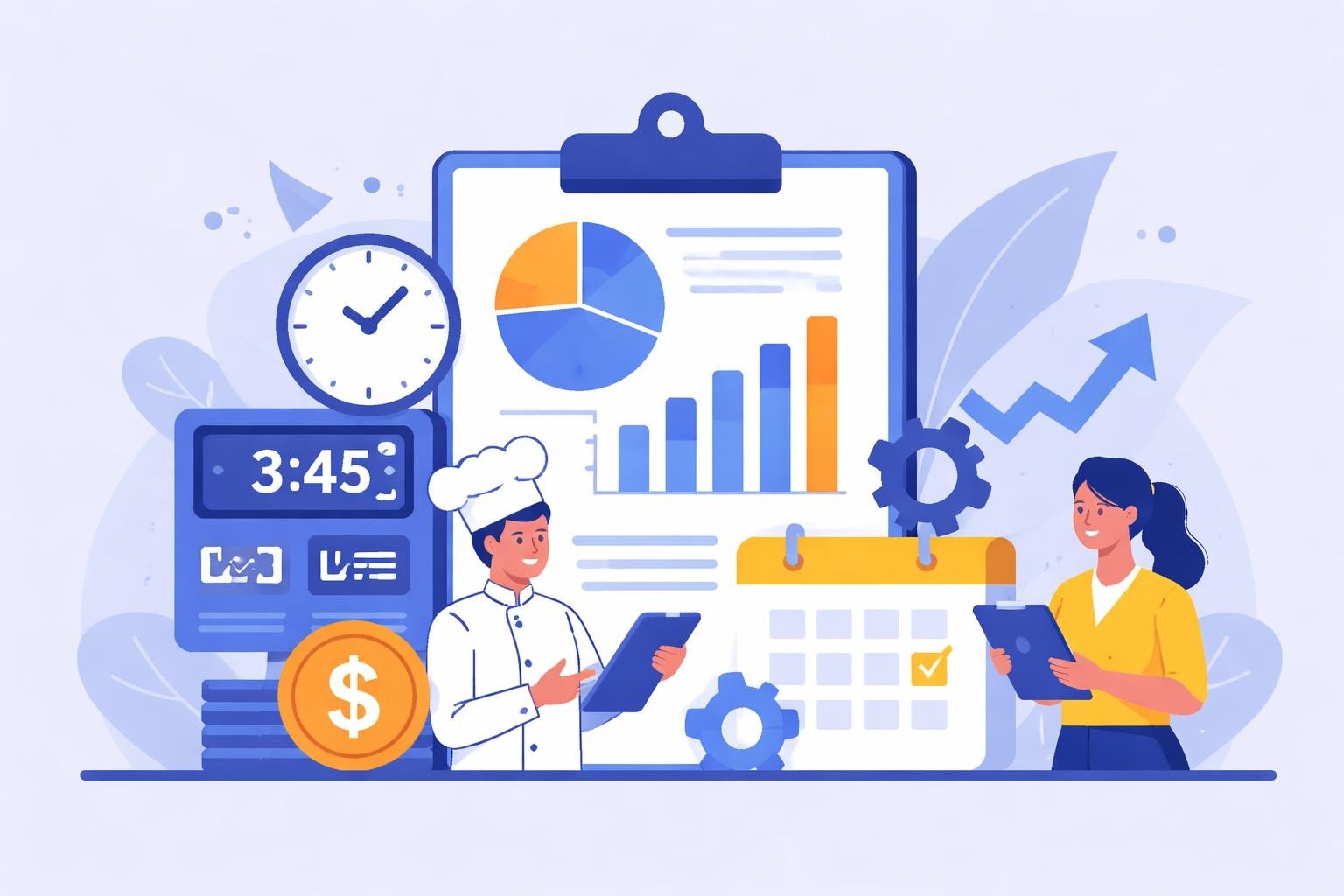
Time tracking reports consolidate employee hours, attendance patterns, and labor costs into structured formats that reveal operational trends. Unlike simple timesheets that show when employees clock in and out, comprehensive reports analyze this data to uncover patterns that affect profitability and efficiency.
Essential Data Points in Effective Reports
Every valuable time tracking report includes several fundamental metrics. Total hours worked provides the baseline for payroll processing, while overtime hours highlight potential cost overruns. Scheduled versus actual hours reveal discrepancies that may indicate chronic understaffing or overstaffing issues.
Breaking down hours by employee, department, or job role helps managers understand where labor resources are allocated. For restaurants, this might mean separating front-of-house from kitchen staff hours, or tracking bartender hours separately from server hours during different shifts.
Report Type | Primary Use | Key Benefit |
|---|---|---|
Daily Summary | Real-time monitoring | Immediate labor cost awareness |
Weekly Analysis | Schedule optimization | Identify staffing patterns |
Monthly Overview | Budget planning | Long-term trend identification |
Overtime Report | Cost control | Prevent unnecessary expenses |
Labor cost percentage calculations become straightforward when tracking accurate time data, allowing you to compare actual spending against revenue during specific periods.
Reducing Labor Costs Through Data-Driven Scheduling
Time tracking reports serve as the foundation for smarter scheduling decisions. By analyzing historical data, managers can predict staffing needs with greater accuracy and avoid the costly mistake of scheduling too many or too few employees for any given shift.

Identifying Peak Hours and Slow Periods
Reports that break down customer traffic patterns alongside employee hours reveal exactly when your business needs full staffing versus reduced coverage. A cafe might discover that Tuesday mornings consistently require two baristas instead of three, while Friday evenings need additional support staff.
Understanding these patterns helps reduce labor costs for restaurants by eliminating unnecessary coverage during predictable slow periods. The data removes guesswork from the equation, replacing manager intuition with empirical evidence.
Key metrics for scheduling optimization:
Average customers served per hour by day of week
Revenue generated per labor hour by shift
Employee productivity rates during different times
Overtime trends by day, week, or season
Break compliance and meal period tracking
When you implement best practices for time tracking, the resulting reports provide the clarity needed to build schedules that align staffing levels with actual business needs rather than perceived requirements.
Improving Payroll Accuracy and Reducing Administrative Time
Automated time tracking reports dramatically reduce the hours managers spend calculating payroll and verifying employee hours. Manual timesheet systems create opportunities for errors, disputes, and time theft that can significantly impact your bottom line over the course of a year.
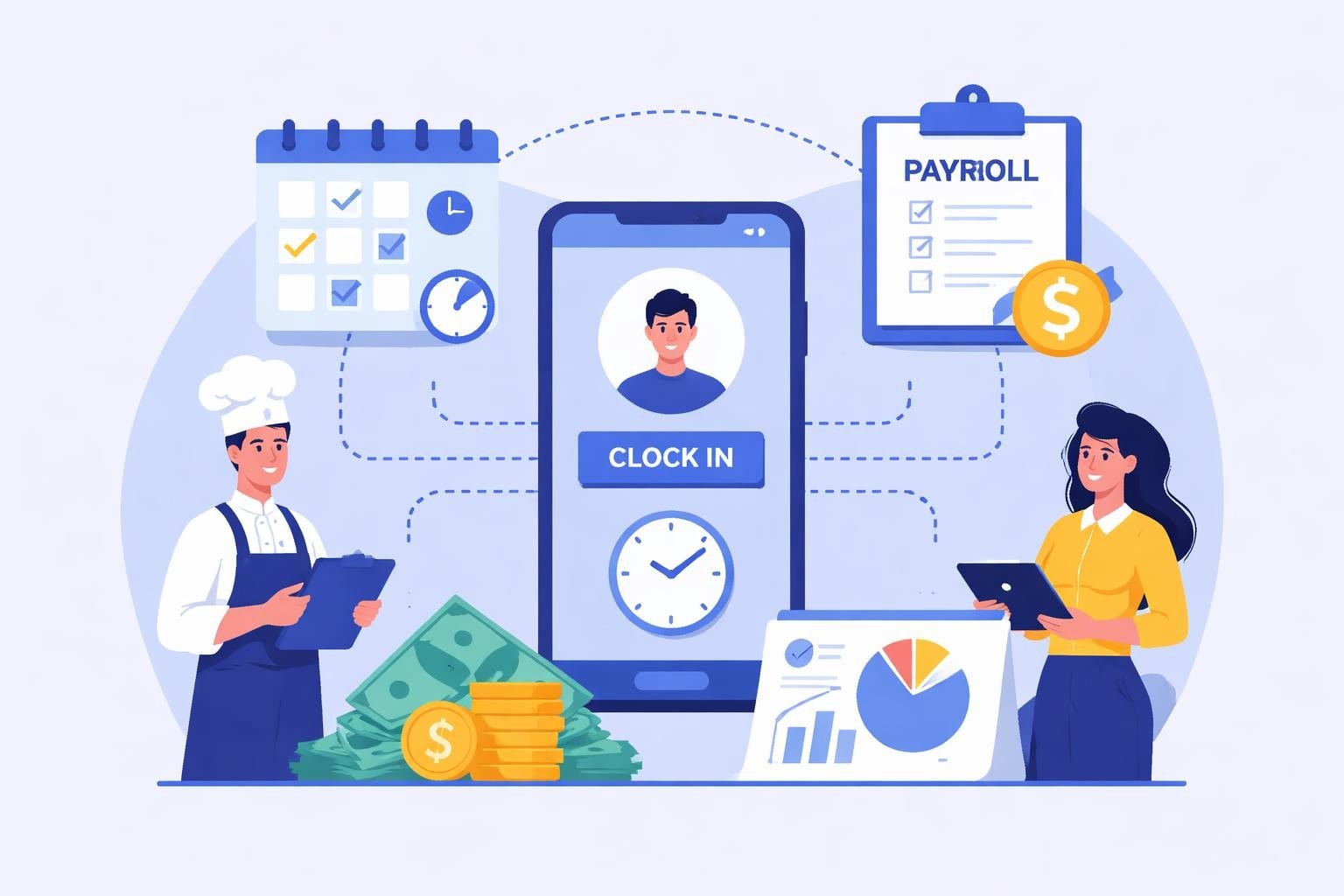
Modern scheduling for restaurants integrates time tracking with payroll systems, automatically calculating regular hours, overtime, and applicable wage rates based on role, seniority, or time of day. This integration ensures that reports feed directly into payroll processing without manual data entry.
Preventing Common Payroll Errors
Time tracking reports help identify and prevent several common payroll mistakes before they become problems. Buddy punching, where one employee clocks in for another, becomes immediately visible through location tracking and pattern analysis. Forgotten clock-outs create gaps that reports flag for manager review.
Rounding errors that favor employees over time can cost businesses thousands annually. Detailed reports show exactly when rounding occurs and whether your rounding policies align with labor regulations while protecting your profitability.
The ability to generate smart reports automatically eliminates the tedious review of paper timesheets and reduces payroll processing time by up to 75% in many service businesses.
Compliance Management and Legal Protection
Time tracking reports provide essential documentation for labor law compliance, protecting your business from costly wage and hour violations. Federal and state regulations require accurate records of hours worked, breaks taken, and overtime paid.
Creating an Audit Trail
Comprehensive reports create a defensible audit trail that demonstrates compliance with the Fair Labor Standards Act (FLSA) and state-specific labor laws. When questions arise about overtime calculations, meal breaks, or total hours worked, detailed time tracking reports provide immediate answers with date-stamped accuracy.
Critical compliance elements tracked in reports:
Meal break duration and timing
Rest break frequency and compliance
Minor employee hour restrictions
Overtime calculations and authorizations
Paid time off accruals and usage
Reports that track break compliance help managers identify employees who consistently skip required breaks or take shorter meal periods than legally mandated. Addressing these patterns protects both employee wellbeing and your business from potential violations.

Analyzing Employee Productivity and Performance
Beyond basic attendance tracking, time tracking reports reveal productivity patterns that inform performance management and training decisions. Understanding which employees complete tasks efficiently versus those who require additional support helps you build stronger teams.
Productivity Metric | What It Reveals | Action Item |
|---|---|---|
Tasks per hour | Individual efficiency | Identify training needs |
Time to complete standard tasks | Skill level comparison | Recognize top performers |
Downtime patterns | Workflow bottlenecks | Improve processes |
Overtime by employee | Workload distribution | Rebalance assignments |
For restaurants and cafes, productivity might be measured in tables served per hour, orders fulfilled, or customer interactions completed. Time tracking reports that incorporate these performance metrics alongside hours worked provide a complete picture of employee contribution.
Recognizing Top Performers and Training Opportunities
Reports highlighting employees who consistently complete tasks in less time while maintaining quality standards identify your most valuable team members. This data supports merit-based raises, promotion decisions, and employee recognition programs grounded in objective metrics rather than subjective impressions.
Conversely, employees who regularly require more time than average for standard tasks may benefit from additional training or process clarification. Time tracking software helps identify these opportunities early, preventing small inefficiencies from becoming ingrained habits.
Forecasting and Budget Planning
Historical time tracking reports provide the foundation for accurate labor budget forecasting. By analyzing seasonal trends, special event impacts, and growth patterns, managers can predict future labor needs with confidence.
Building Realistic Labor Budgets
When planning for the next quarter or fiscal year, detailed reports from previous periods show exactly how labor costs fluctuated throughout the year. A restaurant preparing for summer patio season can review reports from the previous summer to determine optimal staffing levels and anticipated overtime needs.
This historical perspective helps reduce costs through better resource allocation, ensuring budget allocations reflect actual business patterns rather than rough estimates. Reports that break down labor costs by revenue percentage help establish realistic targets that balance service quality with profitability.
Forecasting applications for time tracking reports:
Annual budget development based on historical labor percentages
Seasonal hiring planning using peak period data
Special event staffing using comparable past events
Growth scenario modeling with current efficiency baselines
Department-specific budget allocation based on actual needs
Customizing Reports for Different Stakeholder Needs
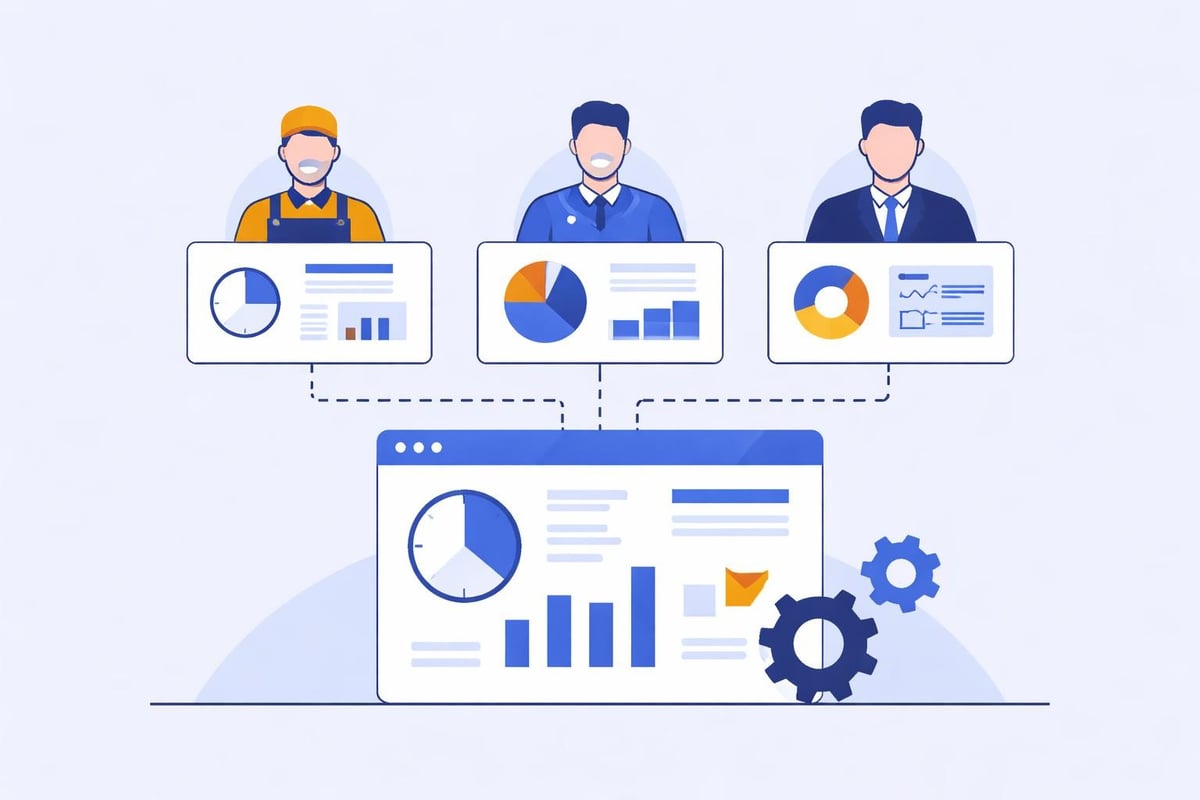
Different audiences within your organization require different information from time tracking reports. Creating customized views ensures each stakeholder receives relevant data without overwhelming detail.
Manager-Level Operational Reports
Front-line managers need daily and weekly reports focused on immediate operational concerns. These reports emphasize current schedule adherence, today's overtime status, and real-time labor cost percentages that help managers make shift-level decisions.
A shift manager at a busy cafe benefits from a simple dashboard showing how actual labor hours compare to scheduled hours, which employees are approaching overtime, and whether the current shift is running over or under the labor budget.
Executive-Level Strategic Reports
Ownership and executive teams require higher-level reports that show trends, comparisons, and strategic insights. Monthly and quarterly reports that compare labor costs across locations, analyze year-over-year efficiency improvements, and track progress toward budget goals serve this audience better than daily operational details.
Implementing effective time tracking practices ensures the data feeding these reports remains accurate and reliable, supporting confident decision-making at every organizational level.
Integrating Time Tracking Reports with Other Business Systems
The full value of time tracking reports emerges when this data integrates with other business systems. Connecting time tracking with point-of-sale systems, accounting software, and scheduling platforms creates a comprehensive operational intelligence framework.
Sales and Labor Correlation Analysis
Integrating time tracking reports with sales data reveals your labor efficiency ratio, showing how much revenue each labor dollar generates. This correlation helps identify optimal staffing levels that balance customer service with cost control.
A restaurant might discover that increasing floor staff during Friday dinner service by one server generates enough additional table turnover to justify the labor expense, while adding an extra bartender on Tuesday evenings provides minimal revenue benefit.
Integration Type | Data Combined | Strategic Insight |
|---|---|---|
POS + Time Tracking | Sales per labor hour | Staffing ROI |
Scheduling + Time Tracking | Planned vs. actual hours | Schedule accuracy |
Accounting + Time Tracking | Labor cost percentage | Budget adherence |
Inventory + Time Tracking | Prep time efficiency | Kitchen productivity |
These integrated reports transform time tracking from a simple attendance record into a powerful business intelligence tool that drives profitability across multiple dimensions.
Mobile Access and Real-Time Reporting
Modern time tracking reports deliver insights through mobile applications, giving managers access to critical labor data wherever they work. Real-time reporting capabilities mean you don't need to wait until end-of-day or end-of-week to understand labor cost implications.
Making Informed Adjustments During Service
When a manager can pull up a real-time labor cost report on their phone during the lunch rush, they can make immediate decisions about sending employees home early if customer traffic is lower than anticipated or calling in additional help if the dining room fills unexpectedly.
This agility helps maintain the delicate balance between sufficient staffing for quality service and excessive labor costs that erode profitability. Employee scheduling solutions with integrated time tracking provide this real-time visibility as a standard feature.
Real-time reporting advantages:
Immediate overtime alerts when thresholds approach
Live labor cost percentage during service periods
Instant schedule adherence notifications
Break compliance monitoring throughout shifts
Remote access for multi-location management
Training Your Team to Support Accurate Reporting
The quality of time tracking reports depends entirely on the accuracy of the underlying data. Investing time in employee training ensures your team understands how to clock in and out properly, take appropriate breaks, and report discrepancies when they occur.
Building a Culture of Accountability
When employees understand how their time tracking affects business decisions, scheduling accuracy, and payroll processing, they become partners in maintaining data quality. Regular communication about the importance of accurate time entry reduces errors and makes billing and invoicing more accurate.
Simple practices like requiring managers to review and approve timesheets within 24 hours of a shift ending catch errors while details remain fresh. Setting up automatic reminders about incomplete timesheets prevents forgotten clock-outs from creating payroll headaches.
Training should cover proper clock-in procedures, break tracking requirements, handling mistakes or missed punches, and understanding how time tracking supports fair scheduling. When employees view time tracking as a tool that benefits them through accurate pay and predictable schedules rather than management surveillance, adoption and accuracy improve dramatically.
Advanced Analytics and Trend Identification
Beyond basic reporting, advanced analytics extract deeper insights from time tracking data. Identifying long-term trends, seasonal patterns, and gradual efficiency changes requires sophisticated analysis that goes beyond simple hour summaries.
Predictive Analytics for Proactive Management
Machine learning algorithms can analyze years of time tracking reports to predict future staffing needs based on factors like weather, local events, holidays, and historical patterns. This predictive capability helps managers proactively address staffing challenges rather than reactively scrambling to fill shifts.
A cafe might receive alerts that historical data suggests next Saturday will require 15% more staff than a typical Saturday due to a combination of favorable weather forecasts and a nearby community event. This advance notice enables proactive staff schedule planning rather than last-minute adjustments.
Advanced analytics applications:
Turnover prediction based on schedule satisfaction patterns
Optimal shift length identification for maximum productivity
Cross-training need identification through skill gap analysis
Seasonal hiring timeline optimization
Labor cost anomaly detection and investigation
Understanding and leveraging time tracking reports transforms how service businesses manage their most significant expense: labor. These reports provide the visibility needed to reduce costs, improve scheduling accuracy, ensure compliance, and make data-driven decisions that directly impact profitability. Heybegin delivers comprehensive time tracking and reporting specifically designed for restaurants, cafes, and service industries, automating the generation of actionable insights that help you optimize every shift. Transform your labor management approach with intelligent reporting that turns employee hours into strategic business intelligence.